
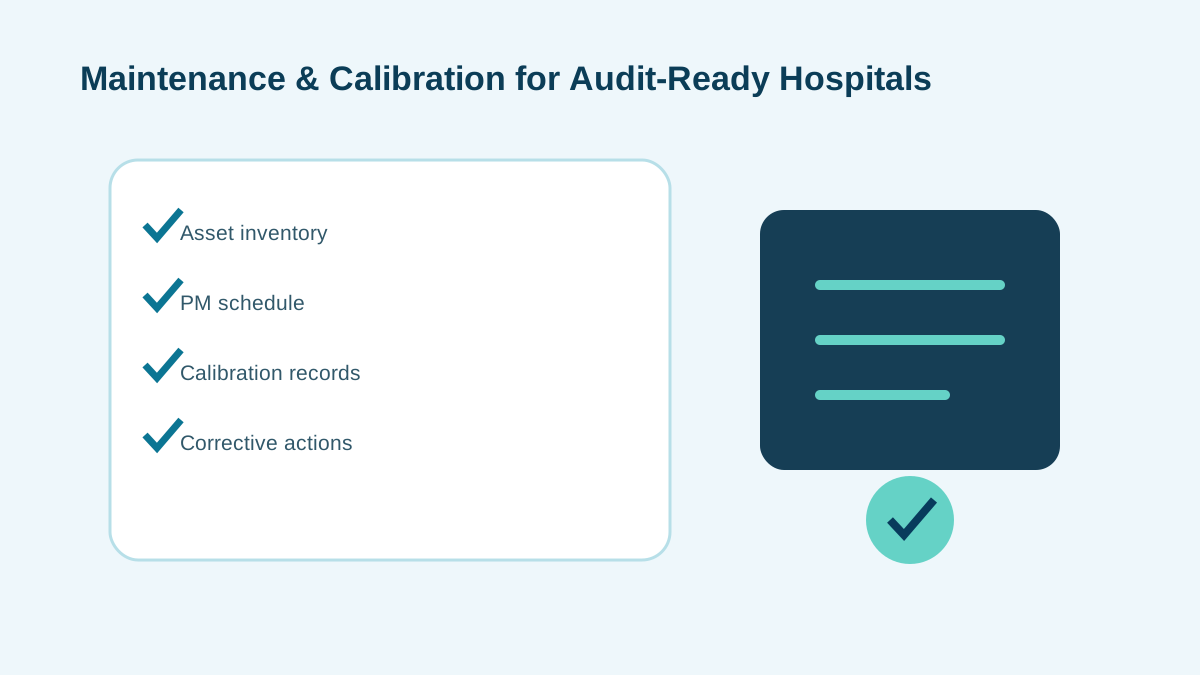
Medical equipment maintenance and calibration should be managed as an everyday hospital system, not assembled shortly before an accreditation or quality audit. Audit readiness comes from knowing what equipment the hospital owns, its condition, who is responsible for it, what service is due and what happened when a device failed a check.
NABH standards and hospital quality systems may require organizations to demonstrate control of equipment and related processes. Hospitals should always refer to the edition and programme applicable to their facility. BioMed does not certify hospitals for NABH accreditation. Our role is to support equipment maintenance, service documentation and lifecycle practices that can contribute to a well-controlled biomedical engineering environment.
Medical equipment maintenance and calibration belong in one controlled system
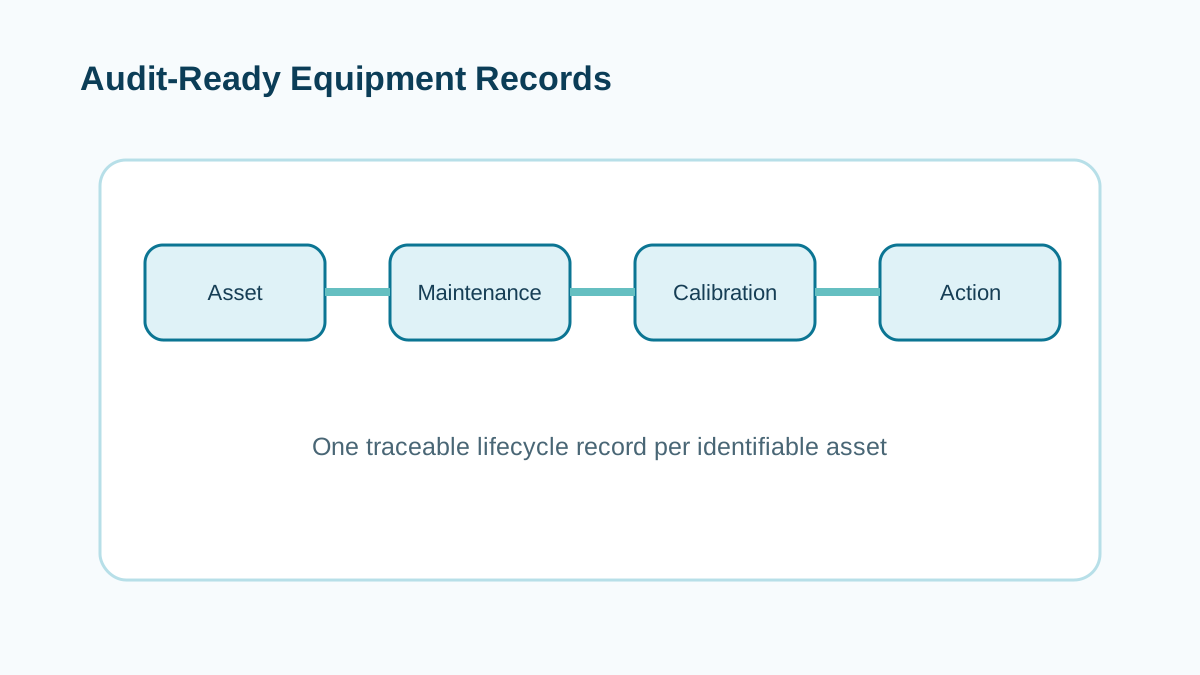
Medical equipment maintenance and calibration answer different questions but should connect to the same asset record. Maintenance asks whether equipment is preserved and serviced appropriately. Calibration asks whether a relevant measurement or output is within the required tolerance against an appropriate reference.
- Preventive maintenance schedule
- Breakdown and corrective maintenance history
- Calibration or performance verification where applicable
- Parts replacement records
- Equipment status and location
- Next due dates and overdue actions
Start with an accurate medical equipment inventory
If the inventory is incomplete, every downstream control becomes weaker. Each active asset should be identifiable and mapped to its clinical location. Hospitals should also record whether equipment is under warranty, AMC, CMC, internal maintenance, repair, storage or retirement.
WHO's medical equipment management resources treat inventory as a foundation for maintenance systems. NHSRC's Biomedical Equipment Management and Maintenance Program similarly emphasizes structured management of equipment and uptime in public health facilities.
Build a risk-based preventive maintenance schedule
A hospital should not assume every item needs exactly the same service frequency. Use manufacturer instructions and consider clinical criticality, usage, failure history and operating environment. Link preventive maintenance to the existing preventive maintenance checklist rather than creating a separate parallel process.
Medical equipment maintenance and calibration need corrective-action control
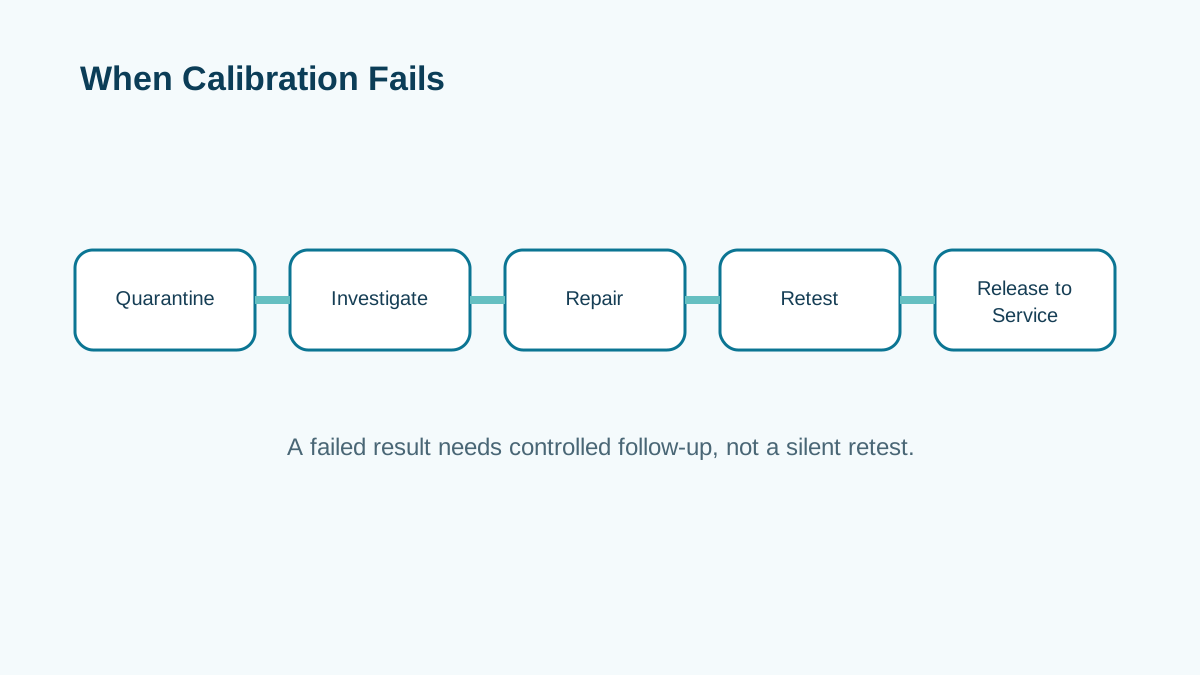
For devices requiring calibration, the record should identify what was tested, the result, reference equipment and next due date. When equipment fails a calibration or performance check, define what happens next. Simply repeating a test until it passes is not a corrective-action system.
What audit-ready documentation should demonstrate
- The equipment can be uniquely identified.
- Maintenance responsibility is clear.
- Required service is planned and tracked.
- Completed work has meaningful evidence.
- Failures lead to corrective action.
- Equipment is not returned to clinical use before required checks are complete.
- Repeated failures influence lifecycle or replacement decisions.
Where AMC and CMC contracts fit
Outsourcing maintenance does not remove the hospital's need for oversight. Contract scope, response processes, exclusions and service reports should remain visible to the biomedical team. BioMed provides AMC and CMC services for defined equipment portfolios in Hyderabad.
How BioMed supports hospitals in Hyderabad
BioMed provides medical equipment services in Hyderabad spanning preventive maintenance, breakdown support, equipment supply, calibration coordination and lifecycle support. The service scope should be defined around actual equipment categories and hospital requirements.
Hospitals that want to review their current maintenance structure can contact BioMed to discuss equipment categories, service coverage and documentation expectations.
Medical equipment maintenance and calibration should be continuous
A strong medical equipment maintenance and calibration programme is visible throughout the year: due dates are monitored, faults are investigated, records are updated and recurring problems influence procurement and replacement decisions. That continuous control is more valuable for hospital operations and audit readiness than preparing documentation only when an assessment date approaches.