
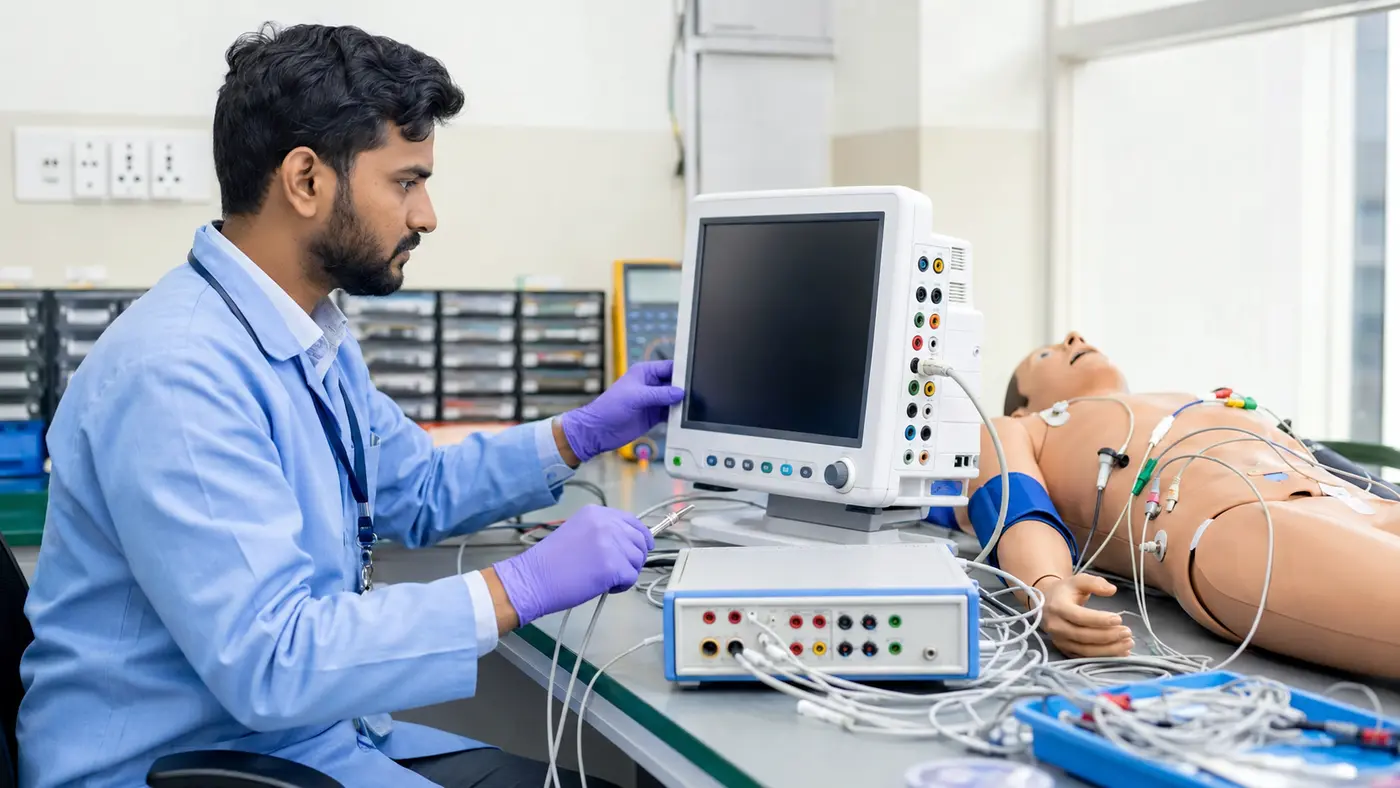
Medical equipment calibration services in Hyderabad help hospitals, clinics and diagnostic centres confirm that devices measure and deliver values within acceptable limits. A patient monitor, defibrillator, ventilator, syringe pump or thermometer may appear functional while still producing a reading outside its expected tolerance. Calibration creates documented evidence that performance has been checked against an appropriate reference.
This is not the same as routine repair. Repair restores a faulty function, while calibration compares measurement performance with a traceable standard and records the result. Healthcare facilities need both activities within a wider equipment-management programme.
Related service language may include biomedical device calibration, hospital equipment testing, clinical instrument verification, or measurement accuracy service.
Why medical equipment calibration services in Hyderabad matter
Clinical decisions often depend on numbers. Blood pressure, temperature, oxygen saturation, delivered volume and electrical output must be dependable. A small measurement error can affect diagnosis, treatment or the confidence of the clinical team.
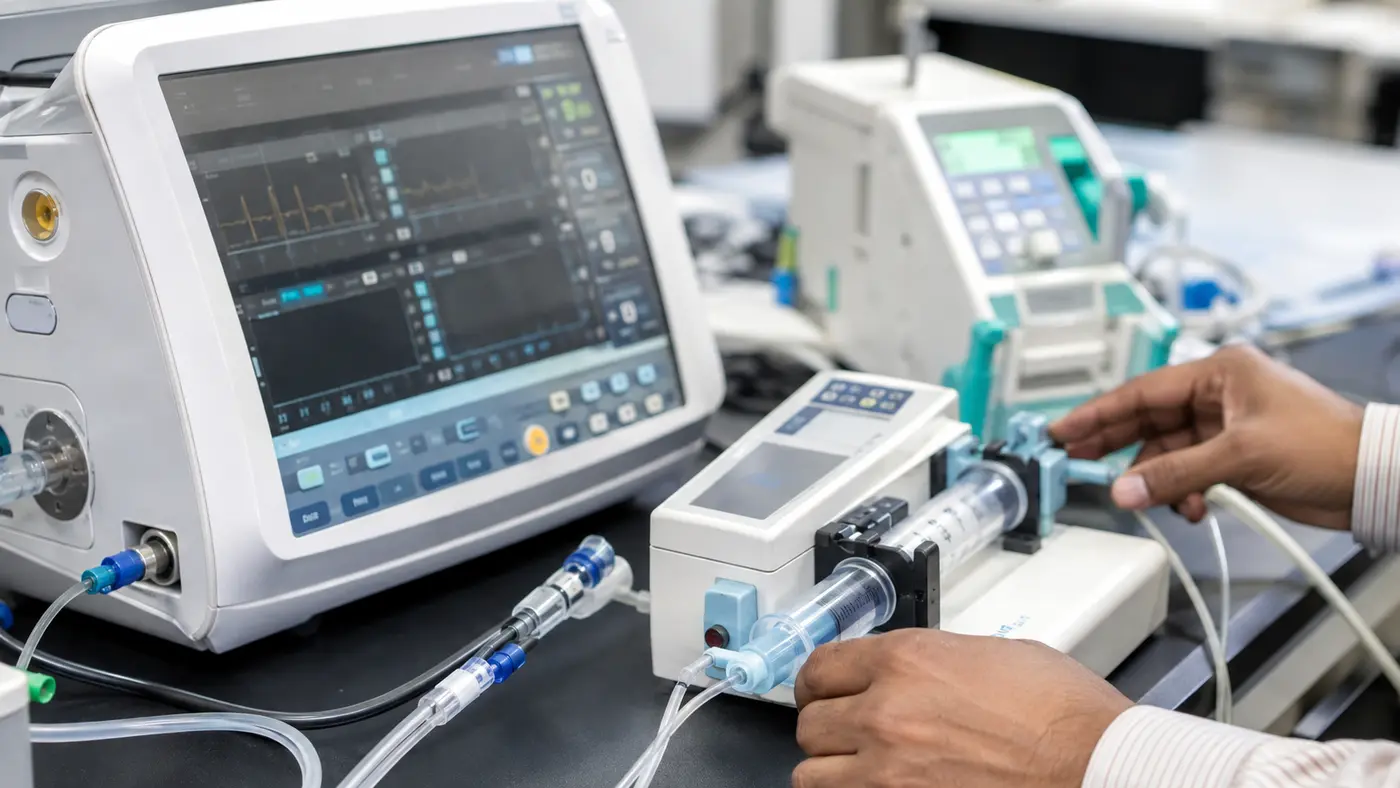
The Government of India's STQC calibration overview lists critical instruments such as defibrillators, ECG machines, patient monitors, thermometers, pulse oximeters, syringe pumps and ventilators among devices supported by medical-equipment calibration facilities.
What a calibration record should contain
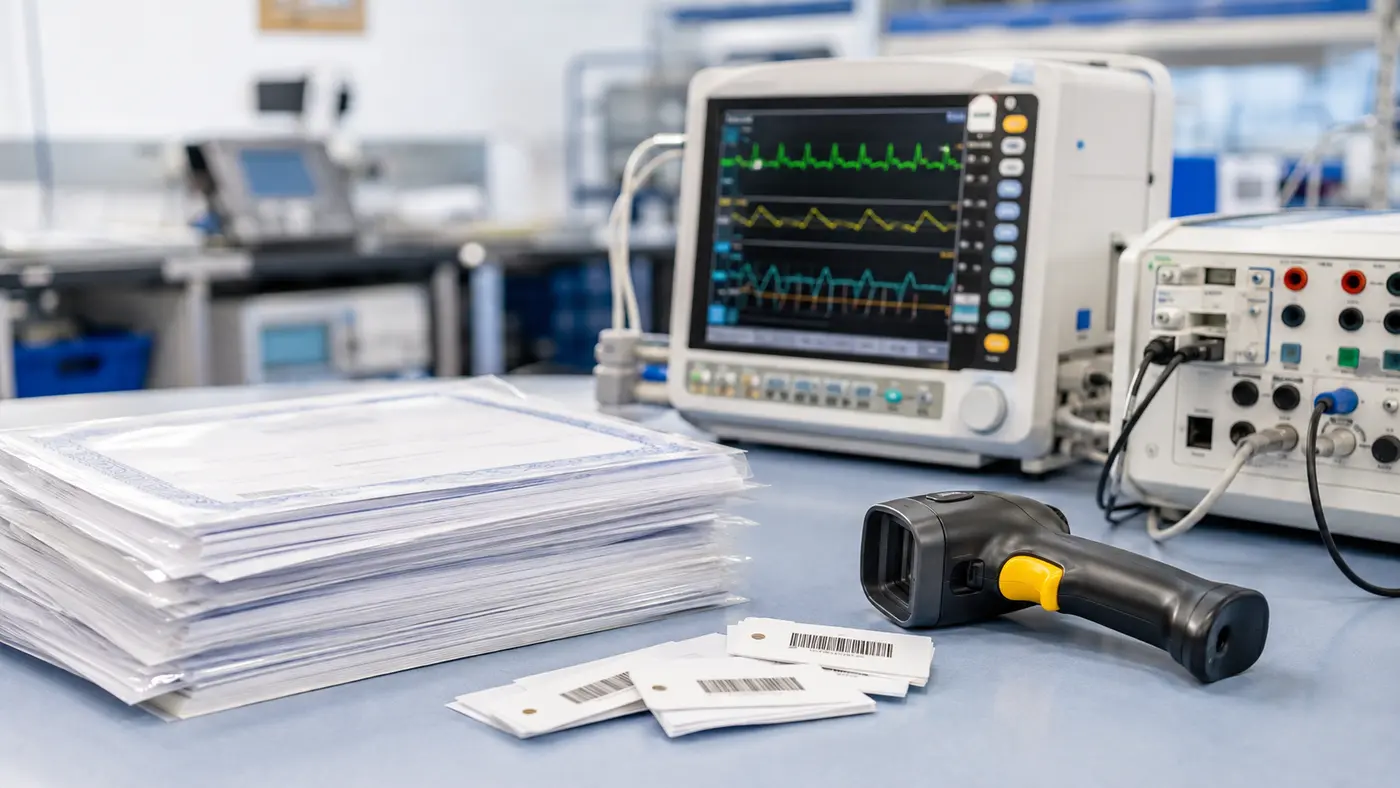
A useful record does more than state that a device passed. It should identify the hospital, department, asset, manufacturer, model and serial number. It should also show the test date, results, acceptance criteria, traceability information, technician or laboratory details and the next due date where applicable.
- Unique asset identification and equipment location
- Test points and measured values
- Reference standard and traceability details
- Pass, fail or adjustment outcome
- Certificate number, date and authorised sign-off
Visible calibration status labels can help users check whether an asset is within its planned cycle before use. The certificate and service history should remain linked to the same asset record.
How hospitals can build a sensible calibration schedule
There is no responsible single interval for every device. Frequency should consider manufacturer instructions, equipment risk, usage intensity, previous results, environmental conditions, repairs and the facility's quality procedures. High-use or measurement-critical equipment may need closer attention than a low-risk device.
- Create a complete asset inventory by department.
- Classify devices according to clinical and measurement risk.
- Record manufacturer-recommended intervals.
- Flag overdue, repaired or frequently failing assets.
- Plan testing so essential services retain adequate backup equipment.
The national equipment maintenance and calibration guidelines explain that laboratory, on-site and mobile calibration arrangements require suitable controls because environmental conditions can influence measurement accuracy.
Questions to ask a calibration provider
Before approving work, confirm the exact equipment categories covered, whether testing will occur on site or in a laboratory, what standards and test equipment will be used, and what certificate will be issued. Ask how out-of-tolerance results are handled and whether adjustments or repairs require separate approval.
- Can the provider support the required brands and models?
- Will traceability details appear on the certificate?
- How will failed equipment be identified and isolated?
- Can the work be scheduled department by department?
- Will digital copies of records be supplied?
Planning medical equipment calibration services in Hyderabad
Calibration is easier to manage when every device has a current location, owner, risk category and service history. BioMed supports healthcare facilities with equipment assessment, service coordination, calibration documentation and lifecycle tracking. Facilities can review the complete calibration support process or discuss an equipment list through the BioMed contact page.
Reliable medical equipment calibration services in Hyderabad begin with accurate asset data and a risk-based schedule, not a last-minute response before an audit. A documented programme helps clinical and engineering teams identify overdue assets, respond correctly to failed results and maintain confidence in the measurements used for patient care.