
Medical equipment repair services help hospitals restore faulty clinical equipment through controlled fault reporting, technical diagnosis, corrective repair, verification and documented return to service. The objective is not simply to make a device switch on again. A repair should address the fault, verify relevant functions and leave a traceable service record for future maintenance decisions.
For hospitals, a breakdown can affect patient flow, department capacity and staff confidence. The response therefore needs to combine technical work with equipment prioritisation, backup planning and clear communication.
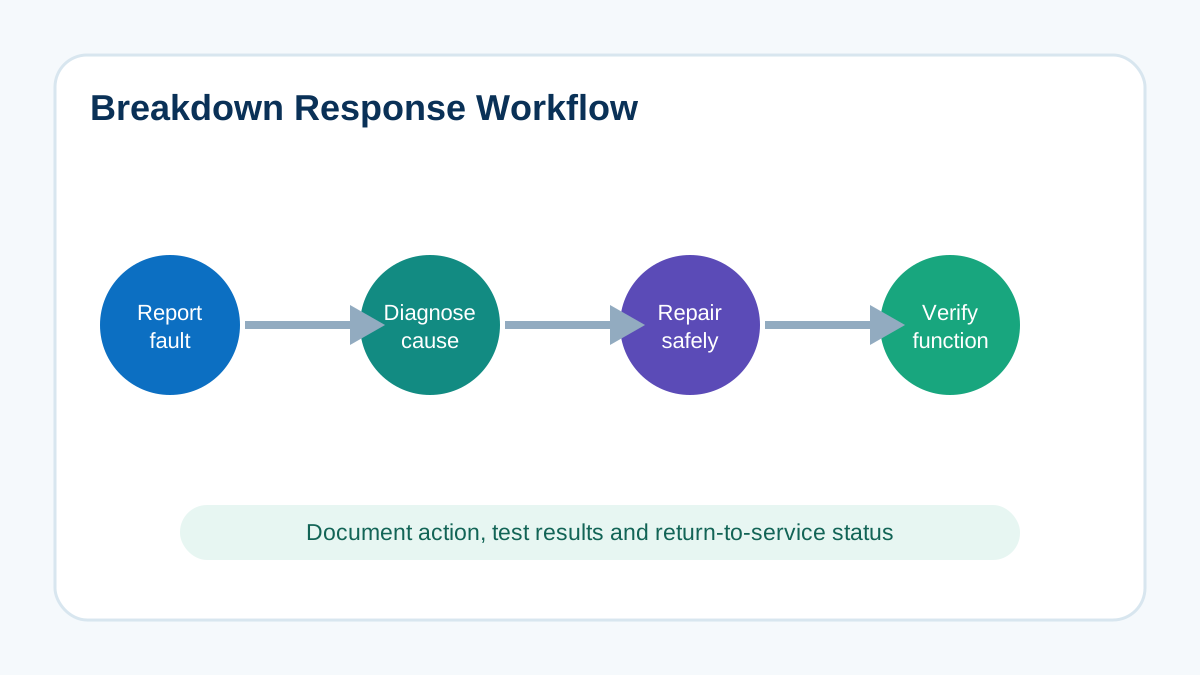
Medical equipment repair services should start with a controlled breakdown process
When equipment fails, users should stop using it if continued operation could create a safety or clinical risk. Identify the device by asset ID, department, make, model and serial number, and record the reported symptom accurately.
- Record the time and nature of the complaint.
- Identify whether the device is clinically critical.
- Remove unsafe equipment from service where appropriate.
- Check whether backup equipment is available.
- Route the complaint to the biomedical team or approved provider.
- Preserve error codes, alarms and user observations that may help diagnosis.
Hospitals can use downtime KPIs such as MTTR and uptime to understand how breakdowns affect operational availability.
Diagnosis comes before parts replacement
Good troubleshooting separates symptoms from causes. A failure may originate in the equipment, power supply, battery, accessory, sensor, cable, configuration, software, environment or user workflow. Replacing parts without confirming the cause can increase cost and allow the same problem to return.
Service teams should follow manufacturer information and appropriate test procedures. Where a repair requires proprietary tools, restricted software, specialist test equipment or OEM-only parts, the hospital should escalate rather than improvise.
Medical equipment repair services need verification before return to use
After corrective work, medical equipment repair services should include functional verification relevant to the fault and device. Depending on the equipment, this can include visual inspection, self-tests, alarm checks, electrical safety checks, performance testing or calibration where applicable.
A repair ticket should document the complaint, diagnosis, corrective action, parts used, tests performed, engineer, restoration time and follow-up recommendation. This history becomes valuable when evaluating repeat failures, maintenance contracts and replacement.
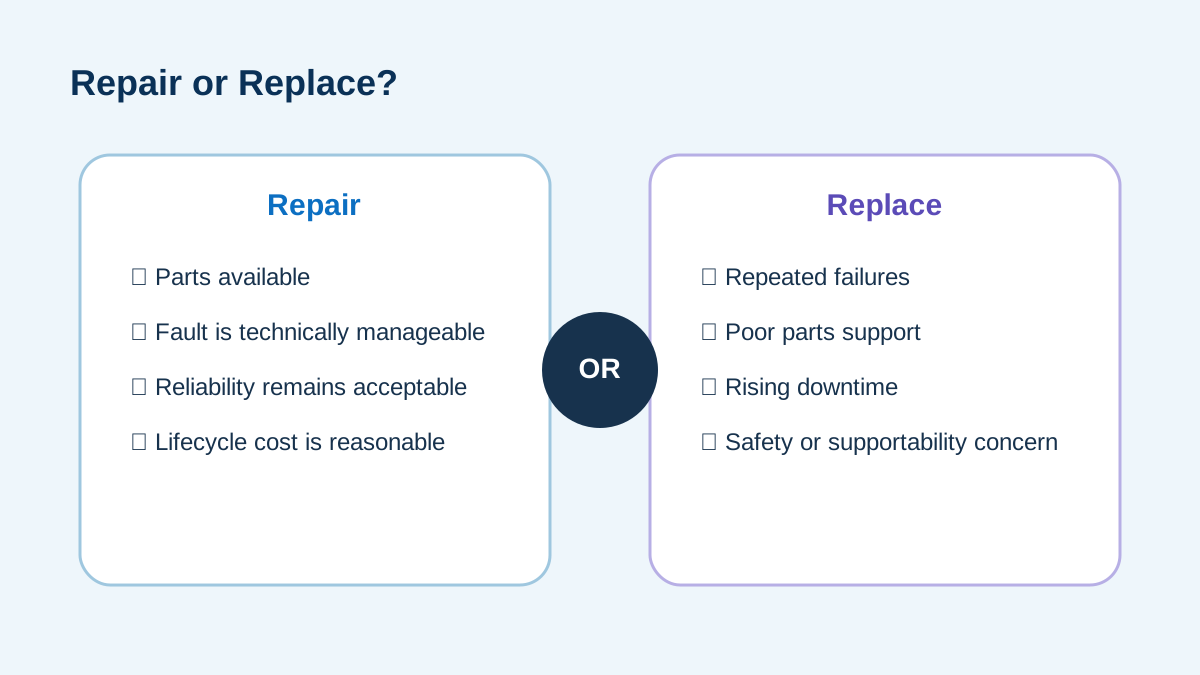
Repair, escalate or replace?
Not every failed asset should be repaired indefinitely. Hospitals should consider equipment age, clinical importance, frequency of failure, parts availability, manufacturer support, repair cost, downtime and whether the device still meets the required clinical purpose.
- Repair: when the fault is technically manageable and lifecycle value remains reasonable.
- Escalate: when specialist OEM support, proprietary tools or higher-level testing is required.
- Replace: when reliability, supportability, safety concerns or lifecycle economics make repeated repair difficult to justify.
Use a structured medical equipment replacement plan instead of waiting for an emergency failure to force a capital decision.
Prevent repeat breakdowns
Corrective repair should feed the preventive maintenance programme. Repeated battery failures, damaged accessories, blocked filters, loose connectors, environmental problems or user-related faults may indicate a system issue rather than isolated breakdowns.
The NHSRC equipment maintenance guidance addresses preventive maintenance, calibration and breakdown maintenance as connected elements of equipment management. The WHO medical equipment maintenance programme overview provides another useful framework.
How BioMed supports hospital equipment repair
BioMed provides medical equipment maintenance and breakdown support in Hyderabad. Service feasibility depends on equipment type, model, fault condition, technical documentation and parts availability. Hospitals can share the make, model, fault description and location through the BioMed contact page for a scope-based discussion.
Questions hospitals should clarify before repair
Confirm who will diagnose the fault, whether an estimate is required before parts are replaced, what testing will be completed after repair and how unresolved faults will be escalated. For older equipment, ask about parts availability before committing to repeated repairs. Hospitals should also define who can authorize equipment to return to clinical use after technical work is completed.
Medical equipment repair services should improve reliability
Effective medical equipment repair services restore equipment through disciplined diagnosis, appropriate repair, verification and documentation. When hospitals also analyse repeat faults and downtime, each repair becomes part of a stronger equipment-management system rather than an isolated technical event.