

Medical equipment risk classification helps a hospital decide where maintenance attention, escalation and backup planning matter most. Treating every asset as equally critical is inefficient. A low-risk support device and a life-support device should not compete for the same response priority simply because both have open work orders.
Risk classification does not replace manufacturer instructions, professional judgement or applicable standards. It provides a transparent way to combine clinical consequence, device function, utilization, failure history and availability of alternatives.
Medical equipment risk classification should support maintenance decisions
A practical medical equipment risk classification framework answers several questions. What happens if the device fails? How directly does it affect diagnosis, monitoring or treatment? How often is it used? Is backup equipment available? Has the device shown recurring failures? These answers help biomedical teams assign service priorities.
- Clinical consequence of failure
- Equipment function
- Frequency and intensity of use
- Failure and repair history
- Availability of backup equipment
- Manufacturer maintenance requirements
- Calibration or performance-verification need
- Environment and mobility
A simple high, medium and lower-risk model
Hospitals can begin with broad groups and refine them later. High-priority equipment may include devices where failure can immediately interrupt critical care and backup is limited. Medium-priority equipment may affect workflow or diagnosis but have alternatives. Lower-risk assets may have limited direct clinical consequence or readily available substitutes.
The category should not be assigned only from the equipment name. The same type of device can have different operational criticality in two facilities depending on volume, backup quantity and clinical role.
Medical equipment risk classification should influence PM frequency carefully
Medical equipment risk classification can inform maintenance scheduling, but hospitals should not arbitrarily shorten or extend intervals without considering manufacturer guidance and competent technical procedures. Risk can influence planning priority, access urgency, review depth and escalation even where the maintenance interval itself remains fixed.
Use failure history to update risk
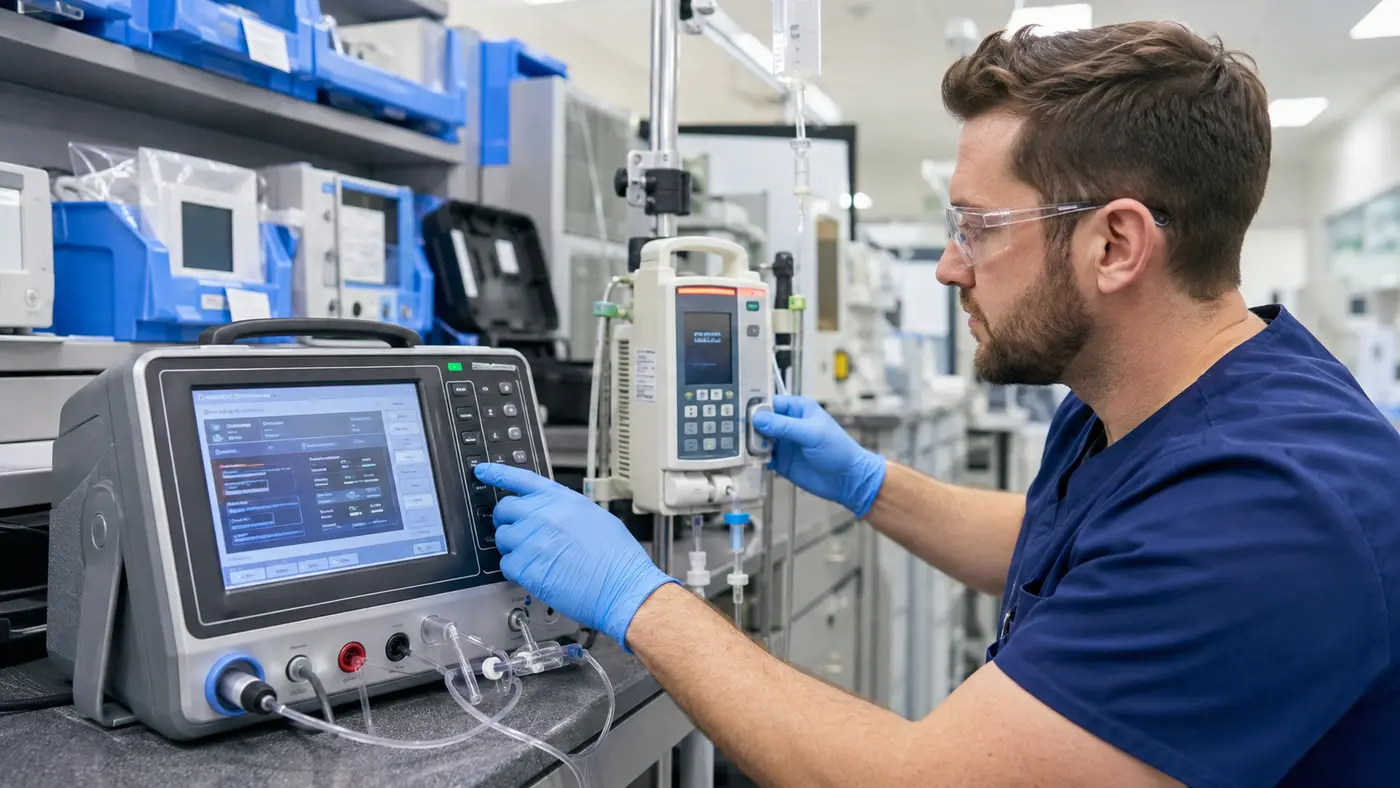
Risk classification should not be permanent. An asset with rising breakdown frequency, recurring alarms, parts obsolescence or increasing downtime may deserve a higher operational priority even if its original classification was moderate.
Use downtime KPIs and utilization analysis to review whether the actual service experience supports the current priority.
Risk classification also helps with spares and contracts
Critical assets may justify stronger spare-parts planning, faster escalation routes, standby equipment or broader service coverage. Lower-risk assets may be managed economically without the same level of redundancy.
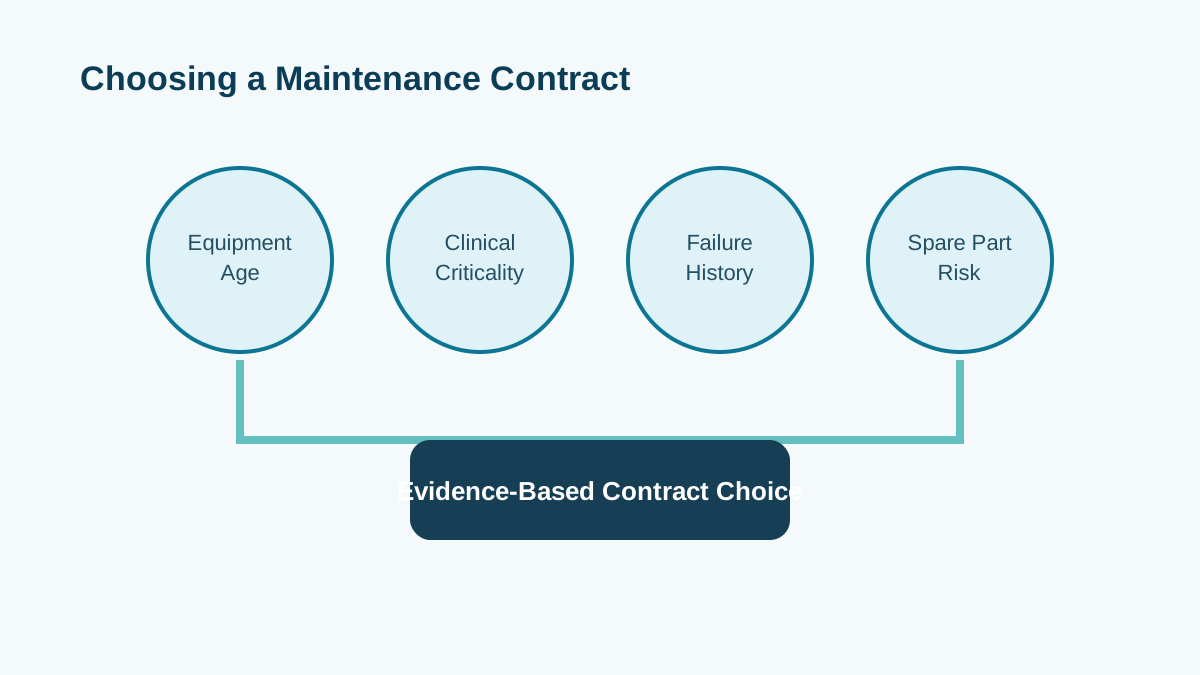
For contract decisions, the hospital can combine risk classification with equipment age and failure history. BioMed's AMC and CMC services can be scoped around defined equipment lists instead of treating every asset identically.
Document the reason behind the score
A numerical score is useful only if another person can understand why it was assigned. Keep the factors, weighting method and review date documented. Review classifications when departments change, equipment is relocated, utilization changes or backup capacity is added or removed.
How BioMed supports risk-based equipment management
BioMed provides medical equipment maintenance and lifecycle support for hospitals and diagnostic facilities in Hyderabad. Service planning can use equipment categories, criticality, condition and service history to prioritize practical support.
For a hospital equipment portfolio review, contact BioMed with the asset list, departments and current service arrangement.
Medical equipment risk classification makes priorities defensible
The main value of medical equipment risk classification is clarity. It helps a biomedical team explain why one device receives faster escalation, tighter monitoring, stronger backup or different service planning than another. When the classification is documented and periodically reviewed, maintenance priorities become more consistent and easier for clinical, engineering and management teams to understand.