

Medical equipment downtime KPIs give hospital managers and biomedical teams a way to measure reliability instead of relying on impressions such as ‘this machine fails often’. A useful KPI system shows how frequently an asset fails, how long restoration takes, how much clinical availability is lost and whether corrective actions are actually improving performance.
WHO describes maintenance as part of a broader medical equipment management system, while NHSRC's Biomedical Equipment Management and Maintenance Program explicitly connects maintenance performance with equipment uptime. That makes reliability measurement operationally relevant, not merely administrative.
Medical equipment downtime KPIs hospitals should track
The strongest medical equipment downtime KPIs are simple enough to calculate consistently and specific enough to support decisions. Hospitals do not need dozens of indicators. A small group of well-defined measures is more valuable.
- Uptime: percentage of required time equipment is available for intended use.
- MTBF: mean time between failures for repairable equipment.
- MTTR: mean time to repair or restore service after a failure.
- Repeat-fault rate: proportion of faults that recur within a defined period.
- Response time: time from complaint registration to technical acknowledgement or attendance.
- Parts-delay time: downtime attributable to unavailable parts or logistics.
How to calculate MTBF and MTTR
MTBF is commonly calculated as total operating time divided by the number of failures during the same period. MTTR is total repair or restoration time divided by the number of repairs. The exact definition should be documented because different teams may otherwise count waiting time, parts delays or vendor travel differently.
For hospital management, consistency matters more than mathematical complexity. If one department records downtime from complaint creation while another starts only when an engineer arrives, comparisons become misleading.
Medical equipment downtime KPIs need clean service data
Medical equipment downtime KPIs are only as reliable as the underlying records. Each complaint should identify the asset, department, reported time, technical response, diagnosis, action, parts used, restoration time and closure status. Link repeated faults to previous work orders instead of treating each one as an unrelated event.
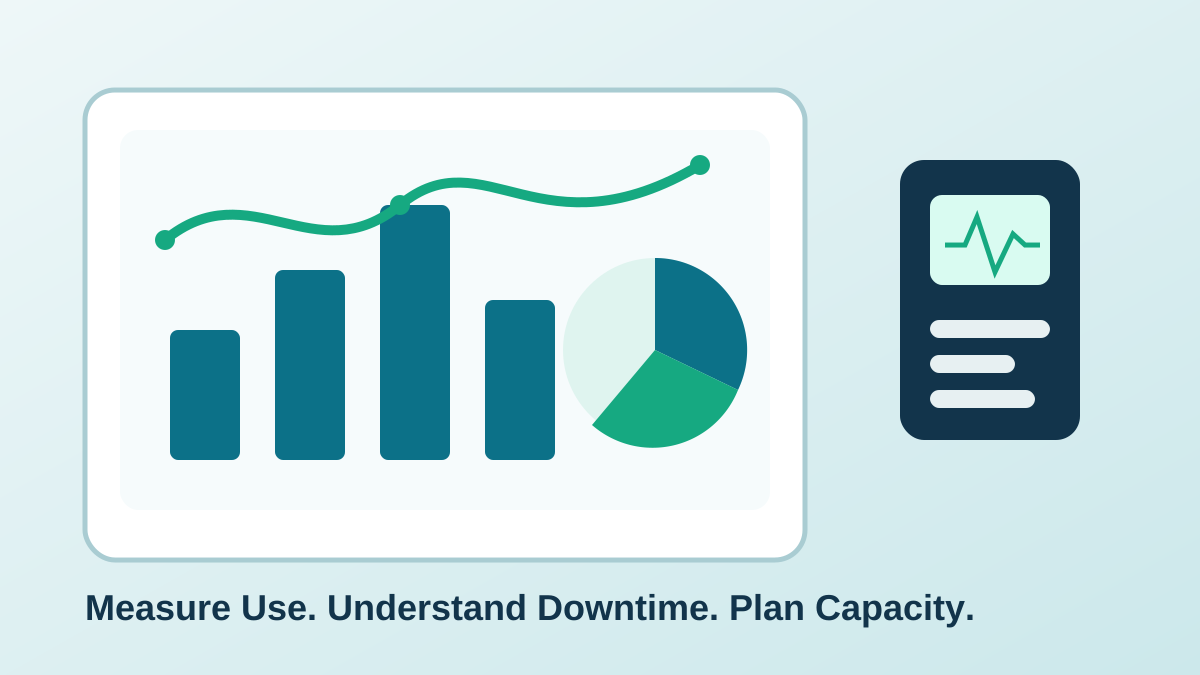
A current medical equipment utilization analysis adds important context. A device with ten failures may still outperform another device with three failures if the first is used continuously and the second is rarely used.
What poor KPI trends may reveal
Rising MTTR can indicate slow diagnosis, parts shortages, vendor delays or weak escalation. Falling MTBF can indicate wear, environmental problems, accessory failures, user issues or an asset approaching end of life. High repeat-fault rates deserve root-cause review because repeatedly restoring the same symptom is not the same as solving the underlying problem.
Hospitals can connect these findings with spare-parts management, replacement planning and AMC or CMC coverage.
Use downtime KPIs in vendor and contract reviews
Maintenance contracts should not be judged only by the number of visits completed. Review actual response time, restoration time, repeat failures, pending parts and unresolved recommendations. A provider completing every preventive visit can still deliver poor operational value if critical breakdowns remain open for long periods.
- Compare promised versus actual response.
- Review top ten assets by downtime.
- Identify delays caused by parts, approvals and access.
- Track repeat failures by model and department.
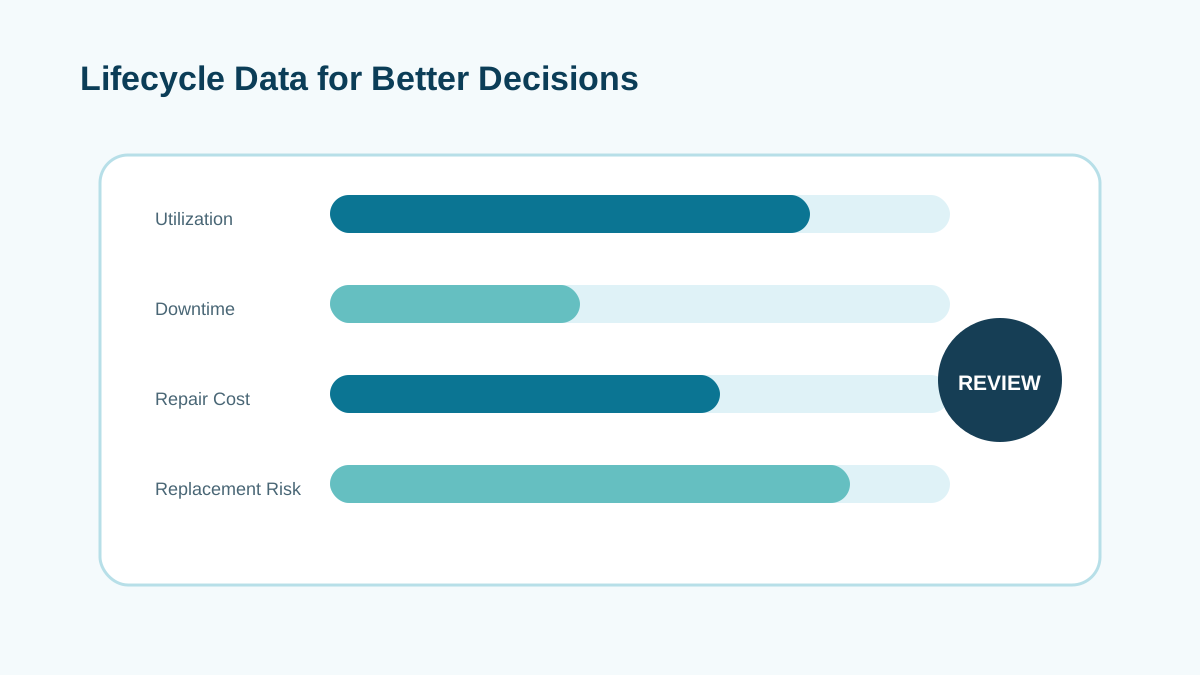
- Escalate assets with deteriorating MTBF or rising repair cost.
How BioMed supports reliability improvement
BioMed provides medical equipment services in Hyderabad covering preventive maintenance, breakdown support, service documentation and lifecycle planning. The objective is to make service history useful for management decisions, not merely to close work orders.
For hospitals reviewing equipment performance, contact BioMed with an asset list, recent breakdown history or service requirement so the discussion can focus on measurable operational priorities.
Medical equipment downtime KPIs turn maintenance into management information
The final value of medical equipment downtime KPIs is not the dashboard itself. Their value is in deciding where to improve maintenance, hold a service provider accountable, stock critical parts, change user practices or replace an unreliable asset. Hospitals that measure reliability consistently can move from reactive repair toward evidence-based equipment management.