
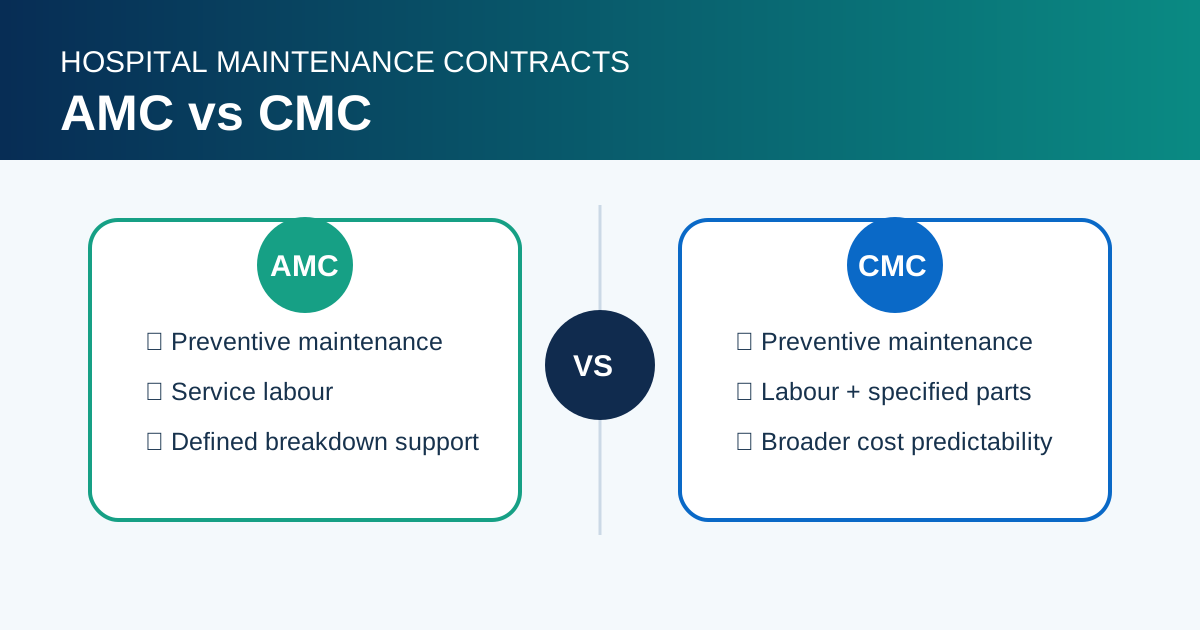
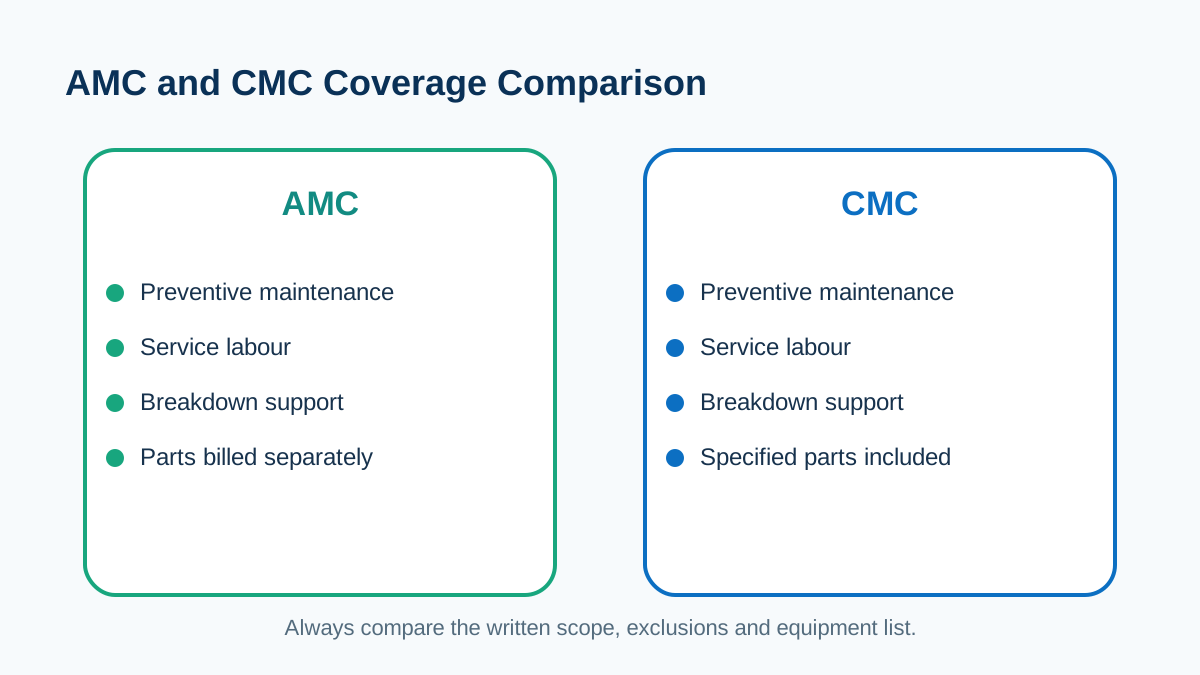
Medical equipment AMC vs CMC is mainly a question of risk allocation. An Annual Maintenance Contract commonly covers scheduled maintenance and service labour according to agreed terms, while a Comprehensive Maintenance Contract generally extends coverage to specified replacement parts as well. Actual inclusions vary by provider, so hospitals should judge the written scope rather than the contract label.
The right choice depends on equipment criticality, age, failure history, parts cost, manufacturer support and how much maintenance-cost variability the hospital is prepared to carry.
Medical equipment AMC vs CMC: understand the practical difference
Under an AMC, the hospital may pay separately for parts, consumables and exclusions. Under a CMC, more parts risk may transfer to the service provider, subject to exclusions, caps and conditions. Neither structure is automatically better.
- AMC: can suit stable equipment with predictable service needs and manageable parts exposure.
- CMC: can suit critical or parts-intensive equipment where broader cost predictability has value.
- OEM contract: may be necessary where proprietary software, tools, restricted parts or manufacturer-only procedures are involved.
- In-house support: can be efficient for suitable equipment when the hospital has competent biomedical staff, tools and test resources.
BioMed's AMC and CMC service page explains the service context for hospitals in Hyderabad.
Compare the scope line by line
Before approving a contract, list every covered asset with make, model, serial number and location. Define preventive maintenance frequency, breakdown response, labour, travel, parts, batteries, probes, sensors, accessories, consumables, software, calibration and documentation.
Pay close attention to exclusions. A low contract price can become expensive if common failure items are excluded. Conversely, paying for comprehensive coverage may not be economical for a reliable device with inexpensive parts.
Medical equipment AMC vs CMC should be decided using service history
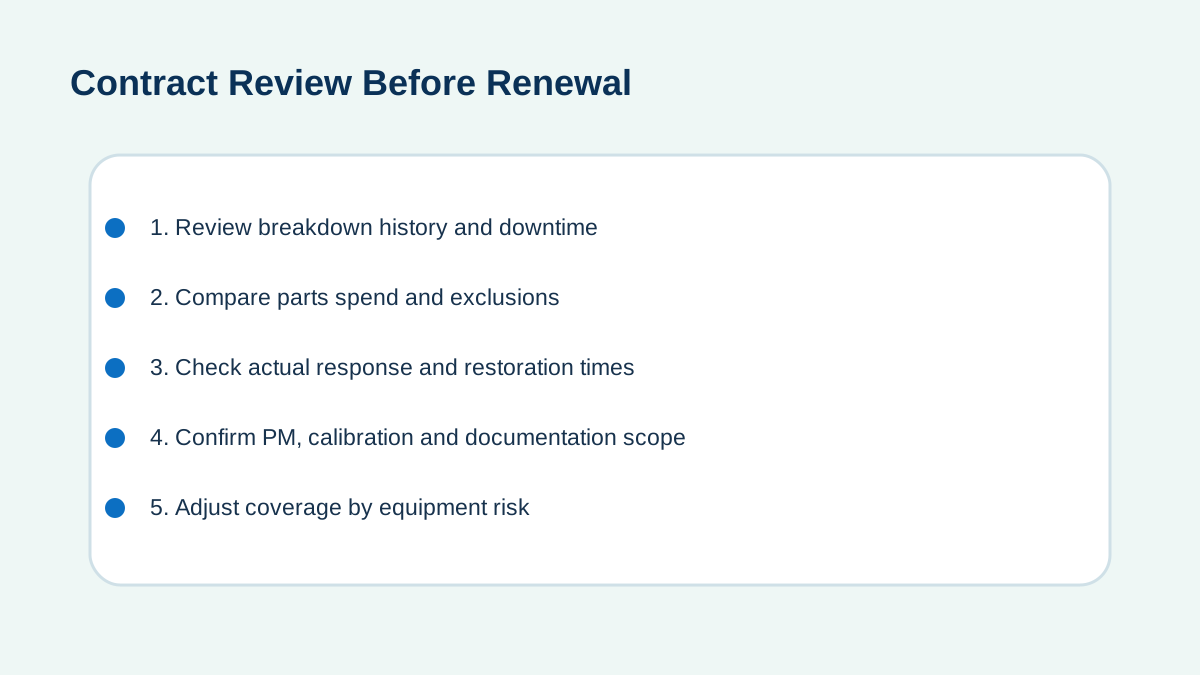
A strong medical equipment AMC vs CMC decision uses actual data. Review the previous 12 to 24 months where records are available. Look at breakdown frequency, MTTR, repeat faults, parts spend and downtime.
Our guide to medical equipment downtime KPIs can help hospitals convert service records into comparable reliability measures.
Questions hospitals should ask before signing
- Which assets and accessories are explicitly covered?
- How many preventive maintenance visits are included?
- What response and restoration commitments apply?
- Which parts are included and excluded?
- Is calibration included where applicable, and what evidence is provided?
- Who pays for travel, freight or specialist attendance?
- How are obsolete or unavailable parts handled?
- What documentation is provided after every visit?
- What are the renewal, termination and escalation terms?
Do not confuse preventive maintenance with calibration
Preventive maintenance is intended to reduce failure risk and maintain equipment condition. Calibration is concerned with measurement performance against defined requirements where applicable. A contract saying maintenance included should not be assumed to include calibration.
The NHSRC guidance on equipment maintenance, calibration and testing is a useful reference when defining hospital maintenance responsibilities.
Review the contract before every renewal
Do not renew automatically because the previous year had few complaints. Low breakdown frequency may mean the equipment is reliable, but it may also reflect low utilization or incomplete reporting. Compare contract cost with actual labour, parts and downtime exposure, then review whether the equipment has become older, more critical or harder to support. Renewal is an opportunity to correct unclear exclusions and response terms.
How BioMed can help hospitals define the scope
BioMed supports hospitals with medical equipment maintenance services, including preventive maintenance and breakdown support for suitable equipment. A meaningful proposal requires an asset list and clear expectations rather than a generic per-machine price. Hospitals can share their equipment list with BioMed for a scope discussion.
Medical equipment AMC vs CMC is a lifecycle decision
The strongest medical equipment AMC vs CMC choice balances cost with clinical criticality and service risk. Compare exclusions, historical failures and parts exposure before choosing. A clearly written scope is more valuable than relying on the words AMC or CMC alone.