
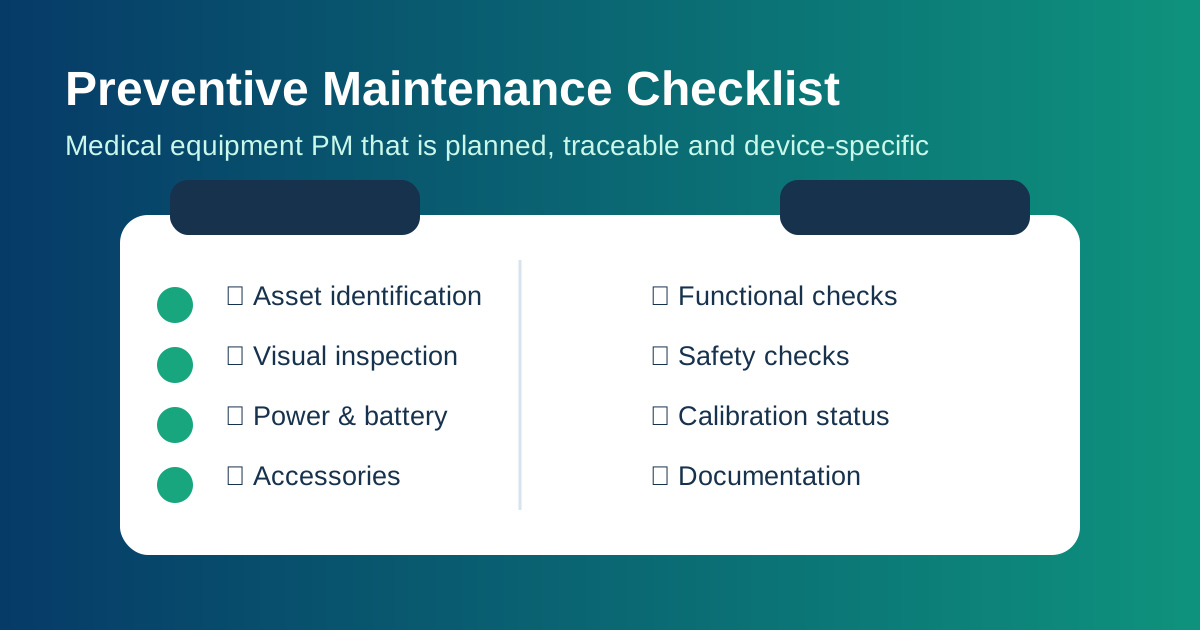
A preventive maintenance checklist for medical equipment gives biomedical teams a repeatable way to inspect, service and document equipment before faults become breakdowns. The checklist should not be identical for every device. Manufacturer instructions, risk, usage, environment and hospital policy should determine the actual tasks and frequency.
The purpose is to make planned maintenance consistent while ensuring technicians still use equipment-specific procedures.
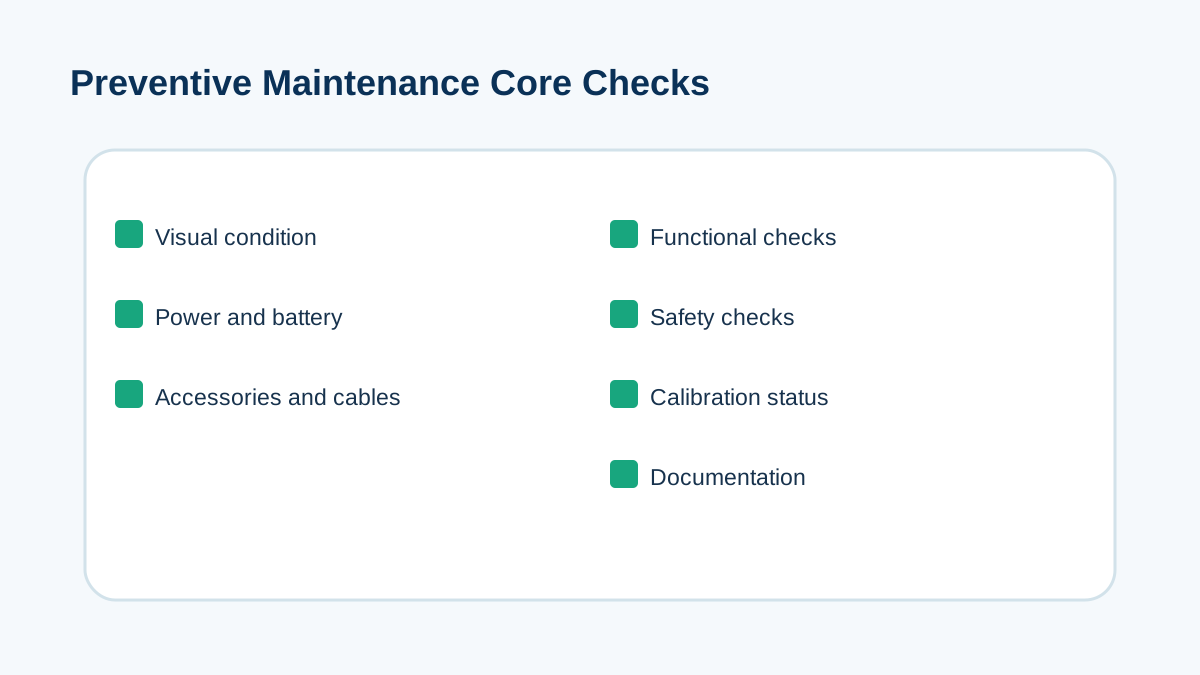
Preventive maintenance checklist for medical equipment: core items
A general hospital PM checklist can begin with the following categories, then add device-specific tests.
- Identification: asset ID, make, model, serial number, department and location.
- Visual condition: enclosure, wheels, brakes, mounts, labels, vents and signs of damage.
- Power: mains cable, plug, fuse condition, battery status and charging behaviour where applicable.
- Accessories: probes, sensors, patient cables, hoses, connectors and supplied accessories.
- Cleaning: dust, filters and surfaces according to manufacturer-approved methods.
- Functional checks: startup, controls, display, alarms and functions relevant to the device.
- Safety tests: applicable electrical or mechanical safety checks using suitable procedures and equipment.
- Calibration status: confirm whether calibration is due or required for the device and measurement function.
- Documentation: findings, actions, parts, test results, next due date and engineer identification.
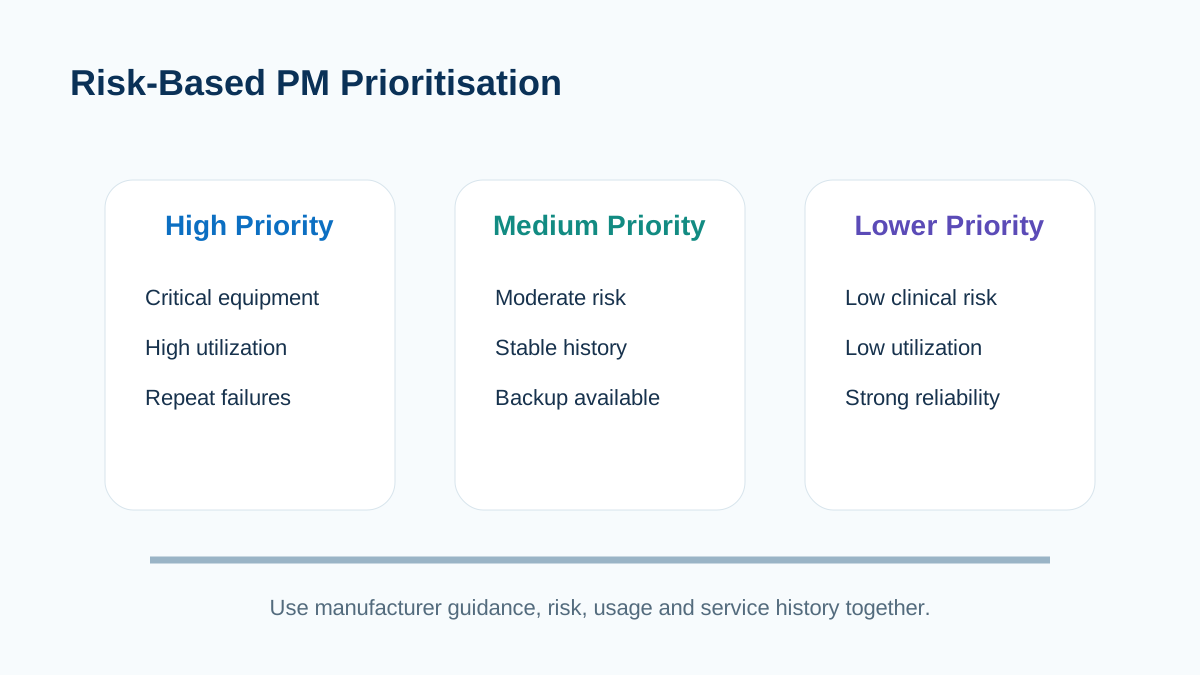
Use risk to prioritise preventive maintenance
Hospitals often manage hundreds or thousands of assets. A risk-based programme helps prioritise equipment whose failure could have greater clinical or operational consequences. Consider device function, clinical criticality, failure history, utilization, manufacturer recommendations and availability of backup units.
Connect the checklist to the hospital's medical equipment asset register so PM status is linked to the correct asset.
A preventive maintenance checklist for medical equipment must be device-specific
A generic preventive maintenance checklist for medical equipment is only the starting framework. A ventilator, infusion pump, defibrillator, patient monitor and laboratory analyser do not require the same procedures or test equipment.
Technicians should use the manufacturer's service information and competent procedures. Do not add invasive technical steps to a generic checklist if they require specialist authorization or proprietary tools.
What should be recorded after PM?
- Date and equipment identification
- PM procedure or checklist version used
- Observed condition and test results
- Defects found and corrective actions
- Parts or accessories replaced
- Calibration or safety-test status where applicable
- Equipment status after maintenance
- Next planned maintenance date
- Engineer or service-provider identification
When defects are found, open a corrective work order instead of hiding the issue inside a completed PM record. This improves traceability and helps the hospital analyse recurring problems.
Coordinate PM with calibration and department availability
PM planning should reduce disruption to clinical work. Group suitable activities, coordinate with department heads and identify backup equipment before taking critical devices out of service. Where calibration is due at a similar time, coordinated planning may reduce repeated downtime.
The NHSRC equipment maintenance guidance provides useful context on planned maintenance, testing and calibration. WHO's medical equipment maintenance programme overview is another useful reference for programme design.
Checklist control matters as much as checklist content
Use version-controlled checklists so technicians are not working from outdated forms. Supervisors should periodically review completed records for missing readings, repeated observations and overdue corrective actions. If a checklist item is not applicable, record that clearly instead of leaving unexplained blanks. Digital systems can improve due-date visibility, but a simple controlled form is still useful when the underlying process is disciplined.
How BioMed supports preventive maintenance
BioMed provides preventive maintenance and medical equipment service support for hospitals in Hyderabad, subject to equipment scope and technical feasibility. Hospitals can use the contact page to share an equipment list for a planned maintenance discussion.
Keep the preventive maintenance checklist for medical equipment practical
The most useful preventive maintenance checklist for medical equipment is one technicians can follow consistently and managers can audit. Keep it equipment-specific, evidence-based and connected to asset history, calibration status and corrective maintenance.