
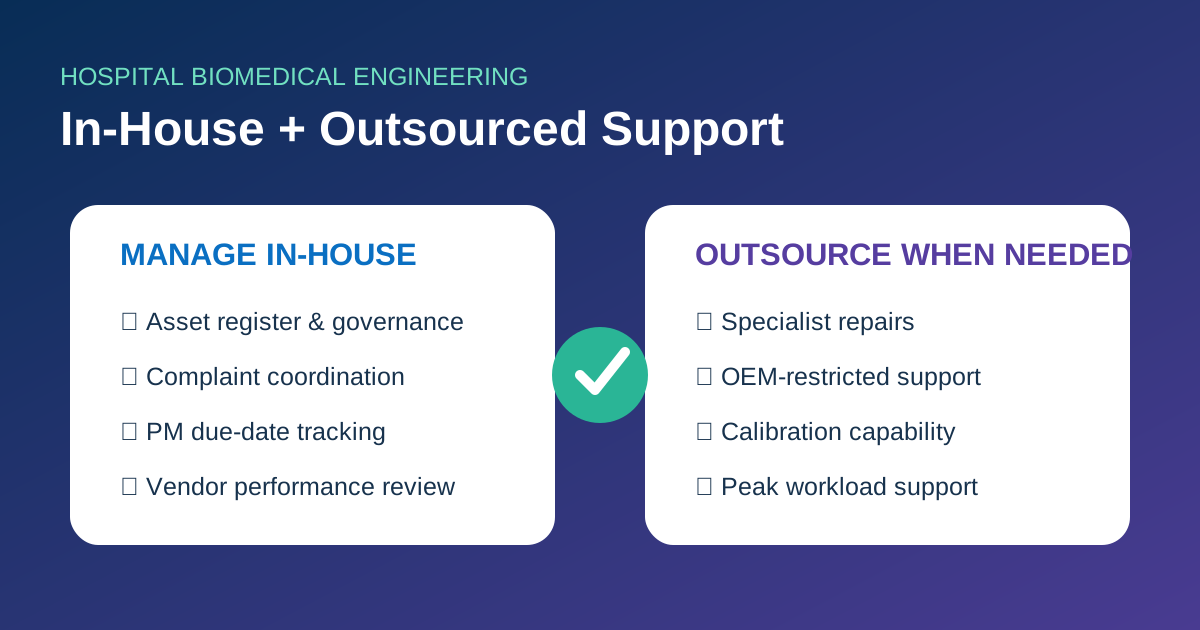
Hospital biomedical engineering services cover the technical management of medical equipment across its lifecycle, from acceptance and asset registration to preventive maintenance, breakdown coordination, calibration oversight, service records and replacement planning. Hospitals do not need to choose between doing everything internally and outsourcing everything. A hybrid model is often more practical.
The right division of responsibility depends on hospital size, equipment complexity, internal skills, test resources, vendor restrictions and clinical risk.
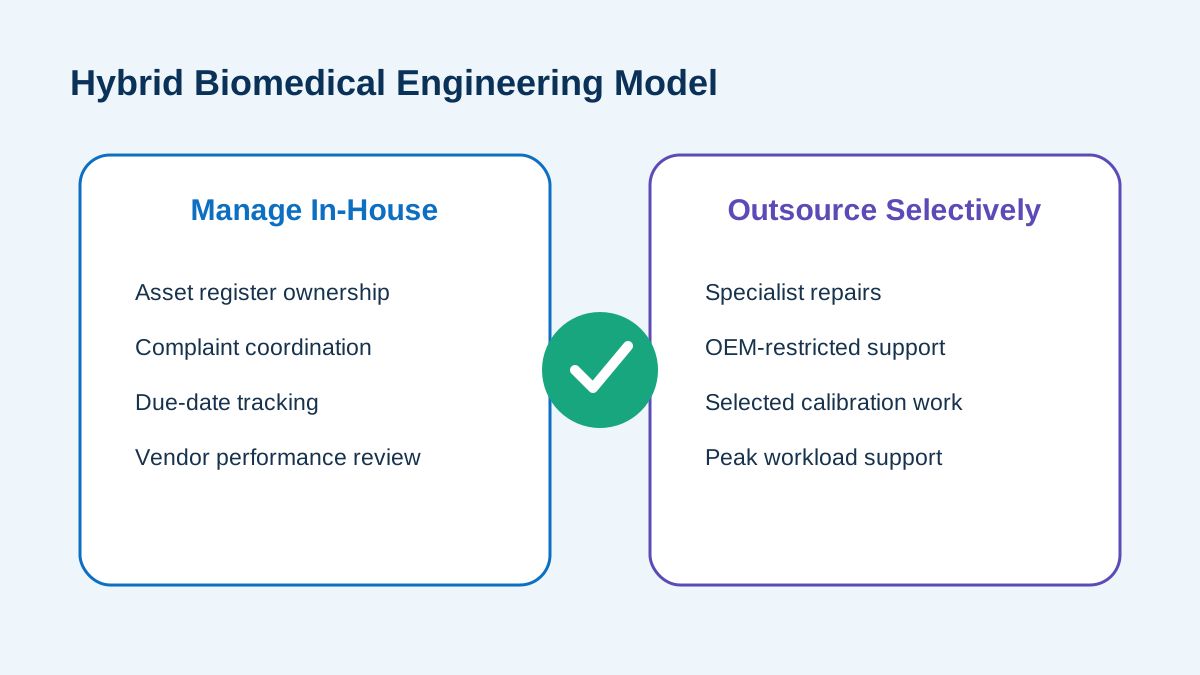
Hospital biomedical engineering services that benefit from in-house ownership
Even when technical work is outsourced, the hospital should retain control of its equipment information and service priorities. Internal biomedical staff are close to users and can respond quickly to operational issues.
- Asset register ownership and equipment identification
- Daily complaint coordination and prioritisation
- Basic visual and functional checks within competence
- User coordination and first-level troubleshooting
- PM and calibration due-date tracking
- Vendor and contract coordination
- Service-document collection and verification
- Equipment utilization and downtime review
- Replacement planning with clinical and finance teams
A strong medical equipment asset register should remain under hospital control even if maintenance execution is contracted externally.
When outsourcing can be stronger
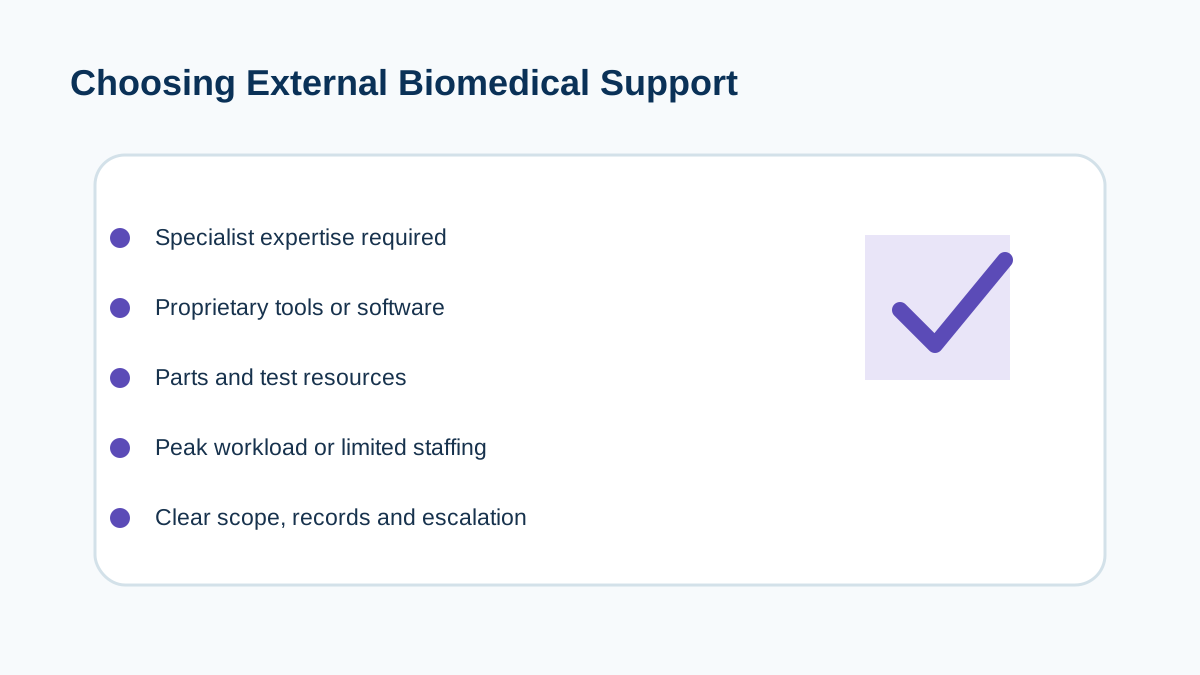
External support is useful when the hospital does not have the required specialist skills, manufacturer access, test equipment, parts network or manpower. Outsourcing can also help smaller hospitals obtain broader technical coverage without building a large full-time team.
- Specialist repairs requiring advanced expertise
- OEM-restricted software, tools or service procedures
- Calibration requiring appropriate standards and capabilities
- Peak maintenance workloads across large equipment inventories
- Multi-vendor support where internal staffing is limited
- Parts sourcing and higher-level technical escalation
Hospital biomedical engineering services should not outsource accountability
Outsourcing hospital biomedical engineering services does not remove the hospital's need to govern equipment performance. Someone internally should verify whether contracted visits occurred, open breakdowns were resolved, reports are complete and recurring faults are escalated.
Contract performance can be reviewed using MTBF, MTTR, uptime and repeat-fault data rather than relying only on the number of visits completed.
A practical hybrid operating model
Many hospitals can keep asset governance, user coordination, first response and maintenance planning in-house while using external providers for scheduled maintenance, specialist repair, parts and selected calibration activities. The boundary should be written clearly.
For each equipment group, define who receives complaints, who can open the device, who supplies parts, who performs testing, who signs the service report and who decides the asset is ready to return to clinical use.
How to choose an outsourced biomedical service provider
- Relevant technical competence for the equipment scope
- Clear preventive and corrective maintenance procedures
- Defined response and escalation process
- Access to appropriate tools and test equipment
- Transparent parts and exclusion terms
- Traceable service documentation
- Ability to report pending risks instead of simply closing tickets
The hospital should avoid vague contracts that promise complete biomedical support without an asset list, scope, response expectations and exclusions.
Measure the hybrid model
Hospitals should review whether the chosen model is actually improving service. Useful indicators include preventive maintenance completion, overdue calibration, breakdown response, restoration time, repeat faults, vendor pending cases and equipment uptime. Review these measures by equipment group and provider. If external support is slow or internal staff are overloaded, responsibilities may need to be rebalanced.
Use authoritative guidance to define the programme
The WHO medical equipment maintenance programme overview provides a useful foundation. In India, the NHSRC guidance on equipment maintenance, calibration and testing offers additional practical context.
How BioMed can support a hybrid biomedical model
BioMed provides medical equipment maintenance and biomedical support services for hospitals in Hyderabad. Scope depends on equipment type, quantity, location and technical requirements. Hospitals can contact BioMed with an asset list to discuss where external support can complement the internal biomedical function.
Hospital biomedical engineering services work best with clear ownership
The strongest hospital biomedical engineering services model assigns each responsibility to the team best equipped to perform it while keeping governance inside the hospital. In-house knowledge and external specialist capability can complement each other when scope, records and accountability are clearly defined.