
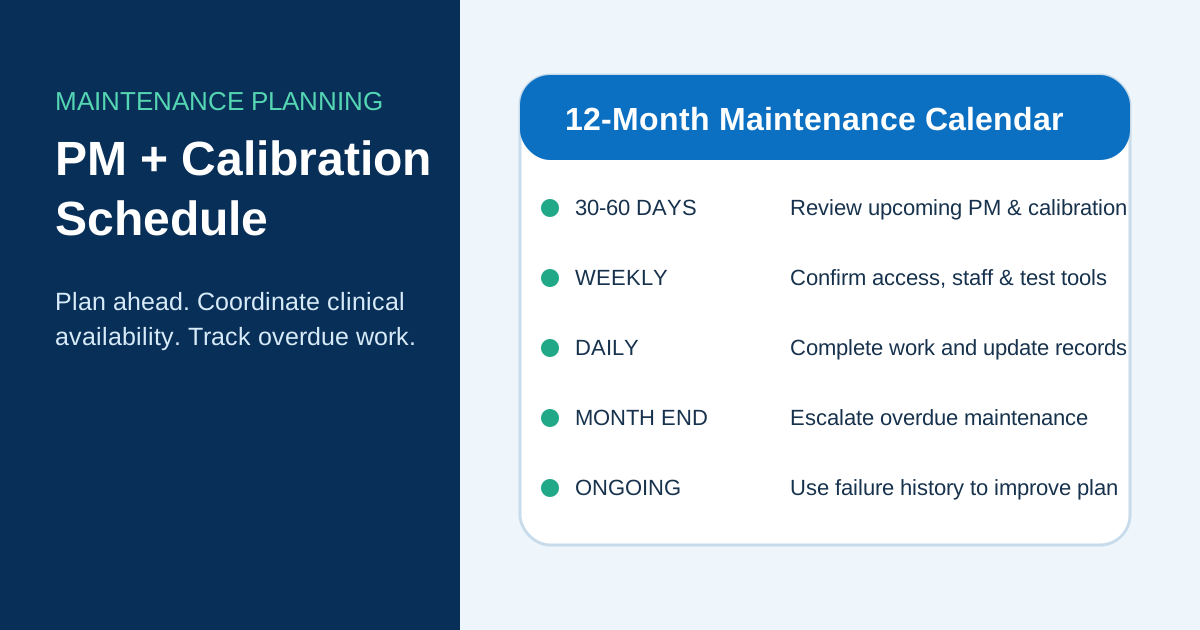
A medical equipment maintenance schedule converts maintenance obligations into planned dates, responsibilities and evidence. Hospitals need more than a list of annual PM dates. A useful schedule considers equipment risk, manufacturer guidance, utilization, service history, calibration requirements and the practical availability of clinical departments.
The goal is to prevent overdue maintenance without unnecessarily removing equipment from patient care.
Medical equipment maintenance schedule: start with a clean asset register
Scheduling fails when asset data is incomplete. Each maintainable device should have a unique asset ID, make, model, serial number, location, commissioning date, warranty status, maintenance responsibility and relevant PM or calibration interval.
If the asset register is weak, first use our medical equipment asset register guide to establish the data needed for planning.
How to determine PM frequency
Do not assign every device the same six-month or annual interval by habit. Review manufacturer recommendations, device type, clinical criticality, utilization, operating environment, age and failure history. Hospital policy and applicable requirements should also be considered.
- Critical equipment may need tighter monitoring and stronger escalation.
- High-use equipment may justify more frequent inspection.
- Harsh environments can accelerate wear or contamination.
- Repeated faults may require additional checks or root-cause action.
- Stable low-risk assets may follow a different maintenance approach where justified.
Medical equipment maintenance schedule planning must separate PM and calibration
A medical equipment maintenance schedule should show preventive maintenance and calibration as related but distinct activities. PM focuses on maintaining condition and function. Calibration, where applicable, evaluates measurement performance against defined requirements.
Some devices may need PM without formal calibration, while measurement devices may have specific calibration requirements. Record each due date separately even when the activities are coordinated on the same visit.
Create a rolling 12-month maintenance calendar
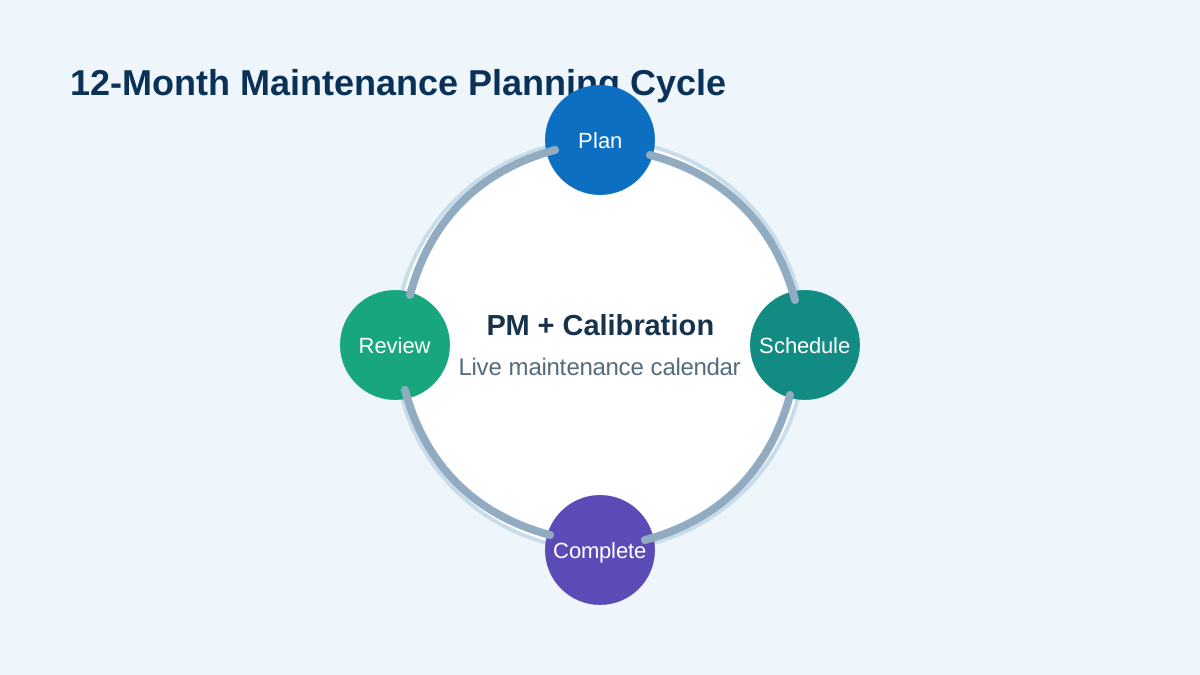
A rolling calendar gives the biomedical team visibility before work becomes overdue. Review the next month's workload in advance and coordinate with departments rather than arriving unexpectedly.
- Monthly: review assets due in the next 30 to 60 days.
- Weekly: confirm department availability, engineer capacity and required test equipment.
- Daily: execute planned jobs and update status immediately.
- After completion: record findings, corrective actions and the next due date.
- At month end: review overdue jobs, reasons and recovery plan.
Plan around clinical availability
Maintenance compliance should not create avoidable service disruption. For critical equipment, coordinate backup units or low-demand windows. Batch similar devices when appropriate, but do not sacrifice device-specific procedures simply to complete more assets per day.
Track equipment that repeatedly cannot be released for PM. Chronic deferral is a management issue because the maintenance programme cannot work if high-use equipment is never available.
Track overdue maintenance separately
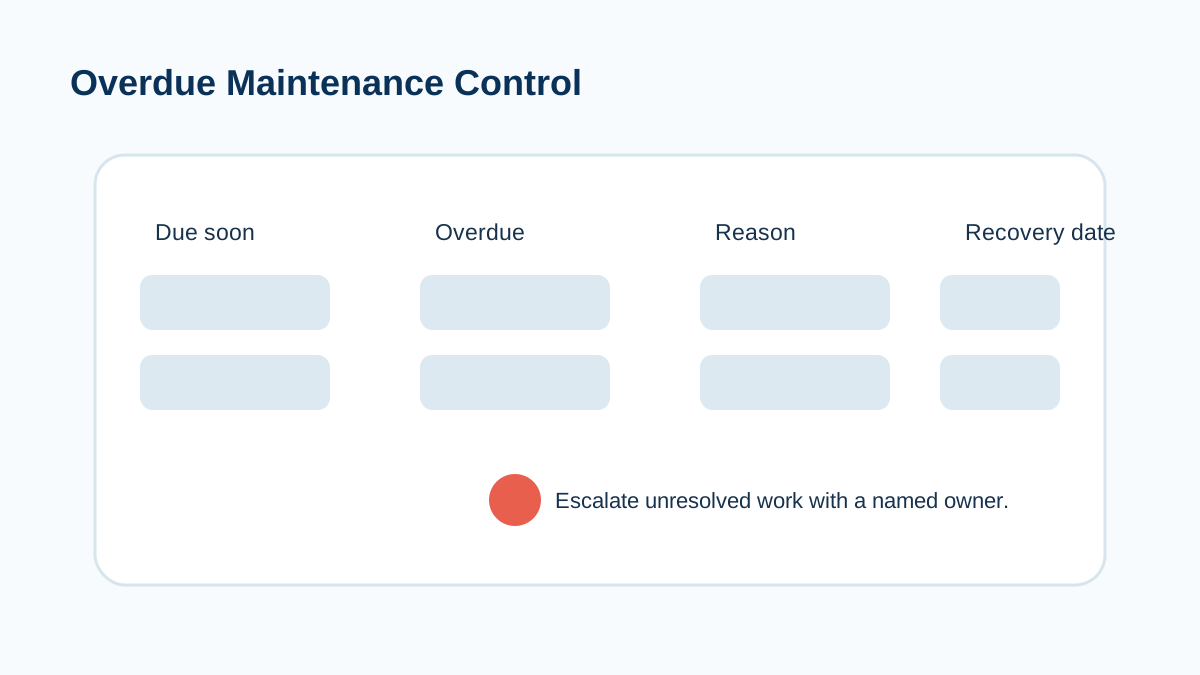
A schedule should distinguish equipment that is due soon from equipment already overdue. Record the reason for each overdue task, such as equipment in continuous use, vendor delay, parts dependency or inability to locate the asset. Assign an owner and recovery date. This prevents overdue work from disappearing into a large spreadsheet and gives management a clearer view of maintenance risk.
Use records to improve next year's schedule
Review breakdown history, PM findings, repeat faults and downtime. If a particular model consistently develops the same issue between planned visits, the schedule or maintenance task may need review. If PM repeatedly finds no deterioration, reassess using manufacturer guidance and risk rather than changing frequency arbitrarily.
The NHSRC maintenance, calibration and testing guidance provides a useful Indian reference. Hospitals can also consult the WHO maintenance programme overview.
How BioMed can support maintenance planning
BioMed provides medical equipment maintenance services in Hyderabad and can discuss PM or calibration-related requirements based on equipment scope. Hospitals should share equipment types, quantities and current due dates through the BioMed contact page.
A medical equipment maintenance schedule should stay live
A strong medical equipment maintenance schedule is not a spreadsheet created once a year and forgotten. It is a live control system that connects assets, PM, calibration, clinical availability, breakdown history and documented completion.