
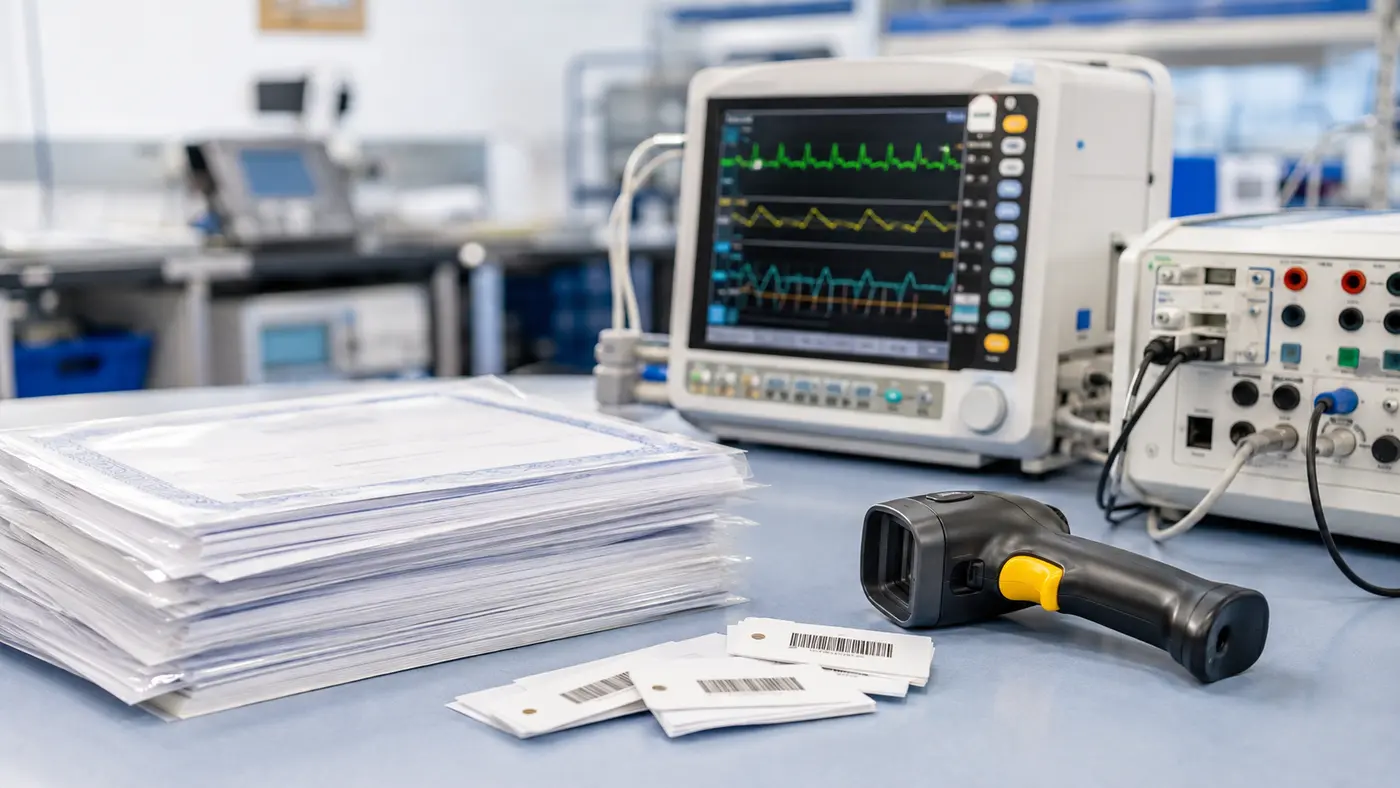
A biomedical equipment documentation checklist helps a hospital prove that its medical equipment is identified, maintained, tested and managed through a controlled lifecycle. Good records are not created only for an inspection. They help biomedical engineers find service history, departments understand equipment status and management identify overdue work before it becomes an audit finding or operational problem.
The strongest documentation system connects every record to a unique asset. A preventive-maintenance report without an asset number, model or serial number may be difficult to trace later. The same principle applies to calibration certificates, breakdown reports, installation records and maintenance contracts.
Biomedical equipment documentation checklist: start with the asset register
The equipment inventory is the backbone of the documentation system. At minimum, record enough information to identify the asset, locate it and understand its maintenance status.
- Unique asset or equipment ID
- Equipment name and category
- Manufacturer, model and serial number
- Department and physical location
- Acquisition and installation dates
- Warranty start and expiry dates
- Supplier and service contact details
- AMC or CMC status where applicable
- Preventive-maintenance and calibration requirements
- Current operational status
Review the register periodically against physical equipment. Transfers, temporary loans, condemned assets and newly installed devices are common reasons for inventory differences.
Keep installation and acceptance records together
For newly acquired equipment, retain the purchase reference, delivery documents, installation report, acceptance results, warranty information, manuals, accessory list and user-training evidence where relevant. Record the exact model and serial number rather than relying only on the purchase description.
Preventive-maintenance records should show what was actually done
A maintenance sticker is useful for quick identification but is not a substitute for a service record. The report should identify the equipment, date, maintenance type, inspections or tests performed, findings, corrective actions, parts used, test equipment where relevant, technician and next due date.
Keep evidence of scheduled tasks as well as completed work. An overdue list is operationally valuable because it shows what still requires action. Where a preventive-maintenance task cannot be completed, document the reason and escalation.
Calibration and performance records need traceability
For equipment requiring calibration or quantitative performance verification, retain certificates or test reports with the asset identity, parameters tested, results, date, due date and traceability information appropriate to the process. If an out-of-tolerance condition is found, record the technical action and the hospital's assessment of affected use according to policy.
Government of India guidance on biomedical equipment management emphasises timely preventive maintenance, calibration, equipment audit and asset management as connected programme elements. Documentation should therefore make these relationships visible rather than storing unrelated files without a common asset reference.
Breakdown and repair history is essential lifecycle evidence
For every significant complaint, record the reported fault, date and time, department, technical diagnosis, corrective action, replaced parts, testing after repair and return-to-service status. Repeated faults become visible only when service calls are recorded consistently.
- Complaint or work-order number
- Reported symptom and equipment status
- Response and closure dates
- Diagnosis and corrective action
- Parts or accessories replaced
- Functional verification after repair
- Technician and department acknowledgement
Maintain contract, training and safety documentation
Keep AMC and CMC agreements with their asset annexures, inclusions, exclusions, visit frequency, response terms and renewal dates. Training records should identify the equipment or topic, date, trainer and participants where the hospital requires evidence of operator competency or orientation.
Electrical safety or other technical testing records should be maintained when required by the equipment type, manufacturer, hospital policy or applicable standards. The documentation system should make the current status easy to retrieve without searching through unrelated folders.
Close the lifecycle when equipment is retired
When equipment is decommissioned, retain the technical recommendation, approval, data-handling evidence where applicable, disposal or transfer record and date removed from the active inventory. Close future maintenance and calibration schedules so retired assets do not continue appearing as overdue.
BioMed provides maintenance, calibration coordination and documentation-oriented equipment support for hospitals and healthcare facilities. To discuss an asset list or service-documentation requirement, use the BioMed contact page.
A disciplined biomedical equipment documentation checklist turns scattered service papers into useful management evidence. When inventory, maintenance, calibration, breakdown, contract, training, acceptance and retirement records are linked to each asset, hospitals are better prepared for audits and, more importantly, better equipped to manage reliability every day.