
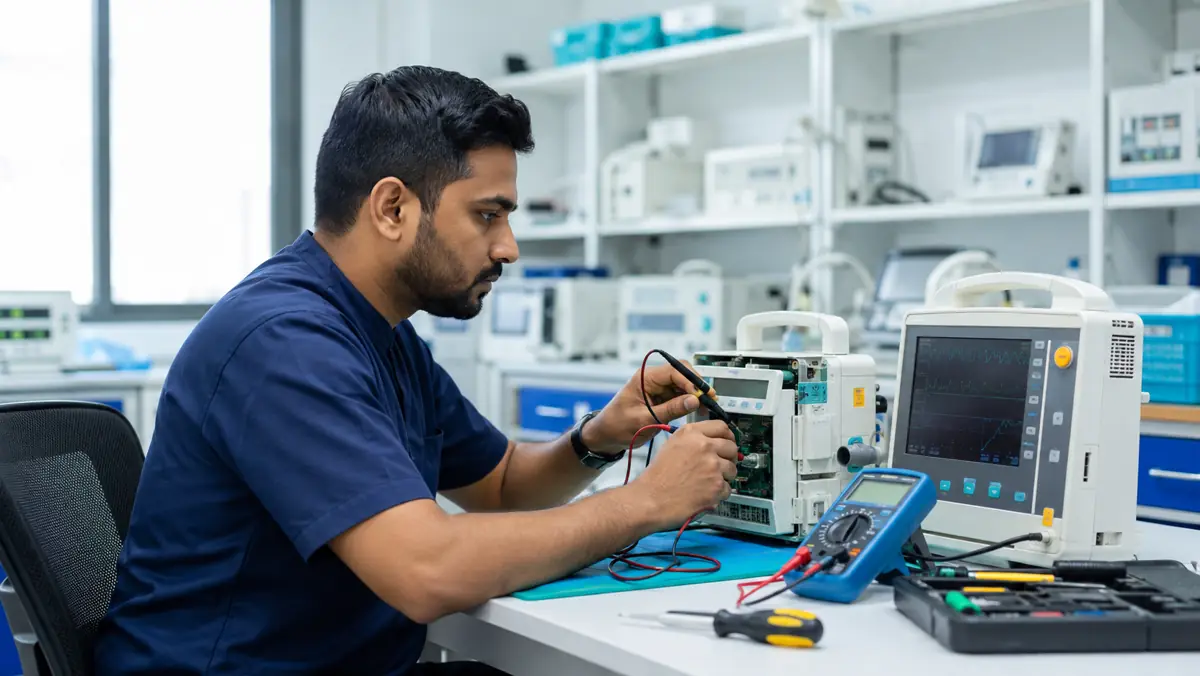
Medical equipment repair services in Hyderabad help hospitals, clinics, laboratories and diagnostic centres respond when a device develops a fault, produces inconsistent results or cannot complete its intended function. A responsible repair process is more than replacing a part. It begins with a clear fault report and ends only after testing, documentation and authorised return to service.
Biomedical equipment repair should follow manufacturer instructions, the facility's safety procedures and the competence limits of the technician. Clinical staff should never continue using a device when its condition could create uncertainty or risk.
When to request medical equipment repair services in Hyderabad
Some faults are obvious, such as failure to power on, a damaged cable or a persistent error message. Others appear as intermittent alarms, unstable readings, reduced battery runtime, unusual sound, leakage, overheating or repeated user complaints. Recording the exact symptom helps the technical team reproduce and diagnose the problem.
- Device does not start, charge or complete self-tests
- Controls, display, alarms or outputs behave inconsistently
- Cables, connectors, probes or enclosures are damaged
- Measurements differ from a known reference or expected range
- The same fault returns after an earlier intervention
What a useful repair request should include
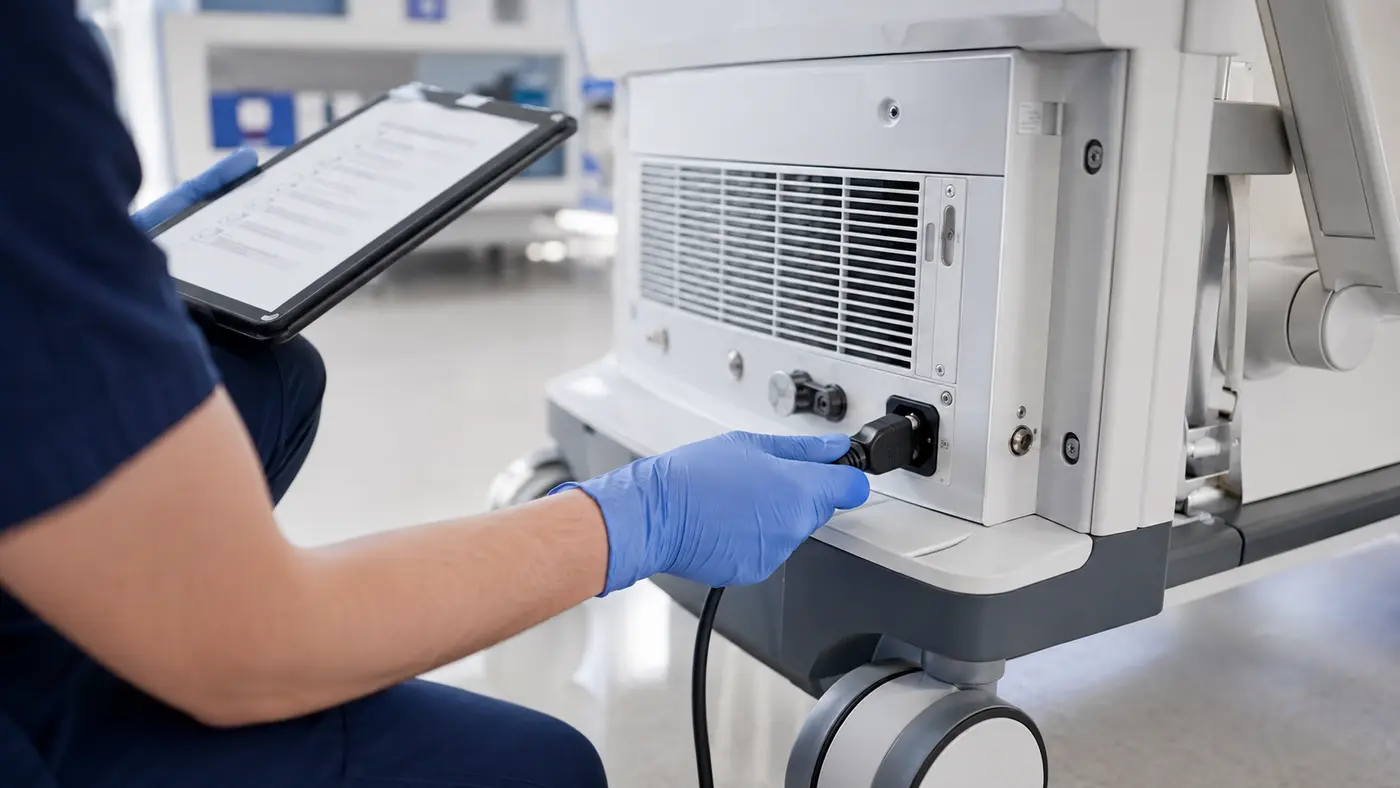
Identify the asset number, manufacturer, model, serial number, department and current location. Describe what happened, when it happened, whether the issue is continuous or intermittent, and whether an accessory or consumable was involved. Include visible error codes without interpreting them unless the manufacturer documentation provides a clear meaning.
Hospitals should isolate equipment according to their internal policy and attach an out-of-service label where required. Patient information must be removed from screenshots, exported files or service communications unless an authorised process specifically requires it.
Diagnosis before parts replacement
A technician should confirm the complaint, review service history and inspect the device systematically. The fault may come from the main unit, power supply, battery, cable, sensor, accessory, configuration or operating environment. Replacing parts without diagnosis increases cost and may leave the real cause unresolved.
- Verify identity, condition and reported fault.
- Review previous repairs and recurring complaints.
- Follow safe inspection and manufacturer troubleshooting steps.
- Use suitable test equipment where measurement is required.
- Document the cause, action, parts and remaining limitations.
The National Health Mission biomedical equipment manual illustrates the value of identifiable equipment records, complaint tracking and maintenance history within a structured programme.
Acceptance checks after repair
A repaired device should not return to clinical use merely because it powers on. The engineer must verify the affected function and any related safety or performance checks required by the manufacturer and facility policy. Calibration may be necessary when repair could influence a measurement function.
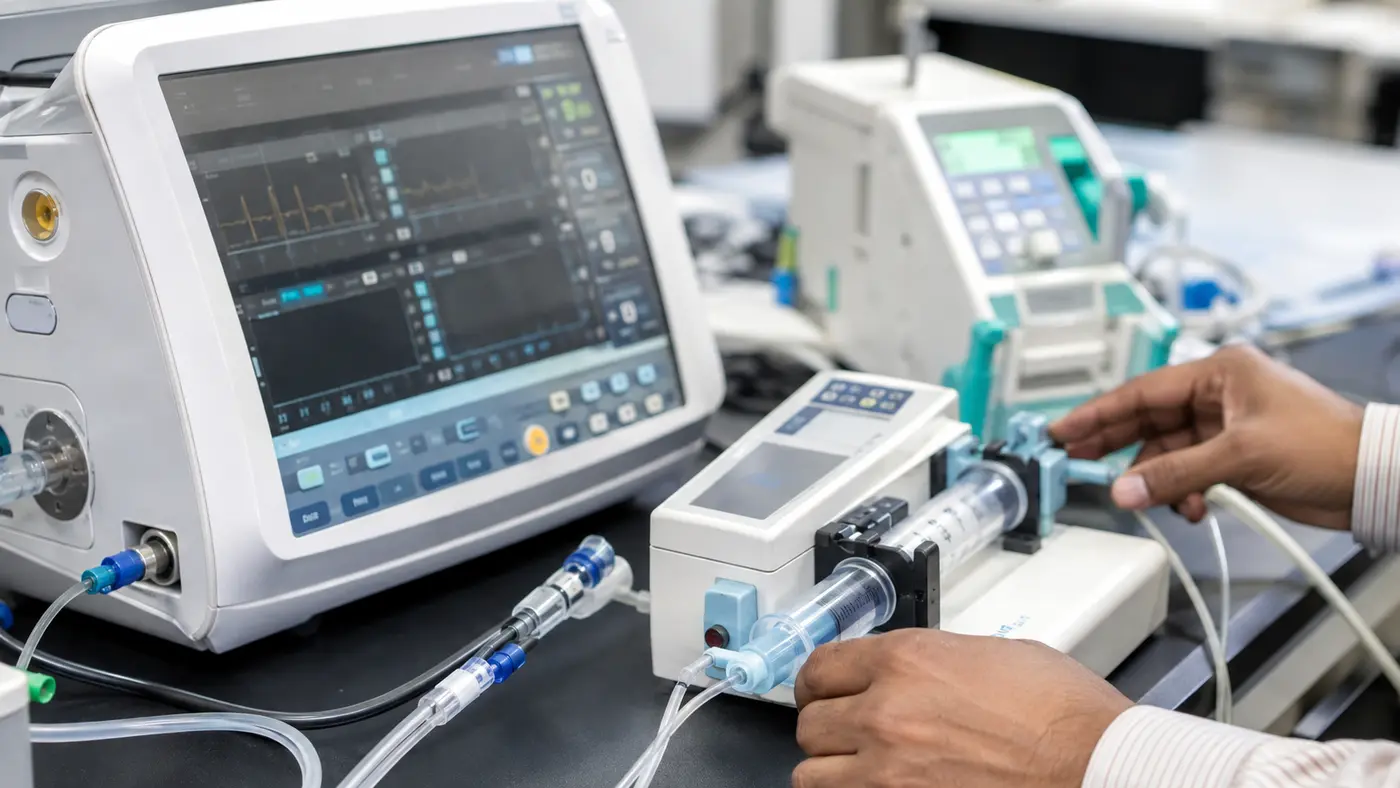
- Confirm the original complaint is resolved.
- Check alarms, controls, accessories and battery where relevant.
- Record measured results and test equipment used.
- State replaced parts and warranty terms for the work.
- Obtain technical sign-off and department acknowledgement.
Choosing a repair provider
Ask which equipment categories and brands the provider can support, whether work is performed on site or at a workshop, and how estimates are approved. Confirm the process for unavailable parts, repeat faults, data handling, service reports and equipment that cannot be economically repaired. Avoid unqualified promises that every model can be repaired immediately.
BioMed provides clinical equipment troubleshooting, on-demand breakdown support and planned maintenance for healthcare facilities. Hospitals can review repair and breakdown support or submit the device category, model and fault through the BioMed contact page.
Reduce repeat breakdowns through repair history
Analyse repeated complaints by device, model, department and failure type. Recurrence may indicate accessory damage, environmental conditions, user-training gaps, overdue preventive maintenance or an asset approaching replacement. Repair records become more valuable when they inform these wider decisions.
Reliable medical equipment repair services in Hyderabad combine careful diagnosis, authorised parts decisions, suitable testing and complete records. This approach helps hospitals manage downtime while ensuring that equipment is returned only after the required technical checks are complete.