
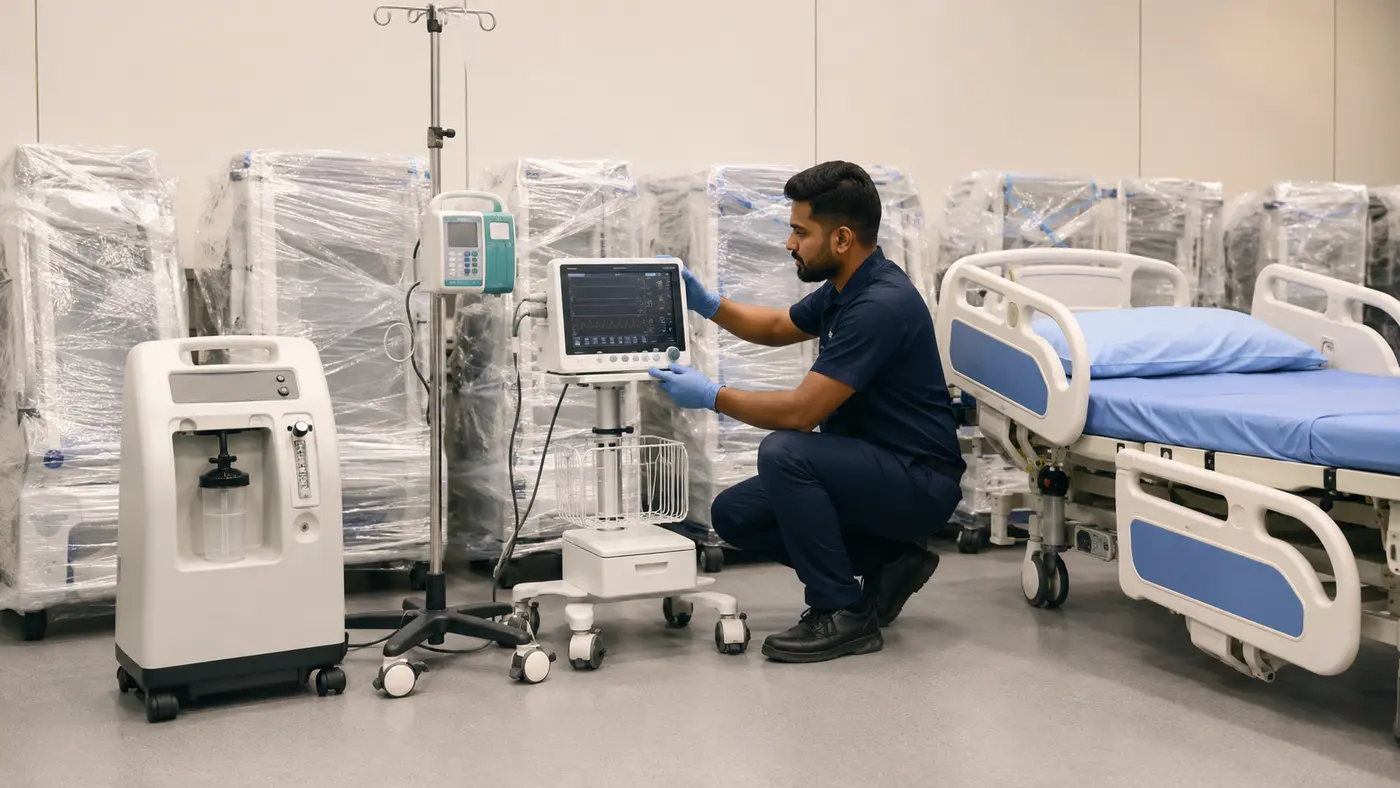
Medical equipment rental in Hyderabad can help healthcare facilities manage temporary demand, replace an asset during repair, support a new service during evaluation or cover a defined project without immediate capital purchase. Rental is useful only when the technical specification, support responsibility and commercial terms are clear before dispatch.
Hospital rental requirements differ from ordinary consumer rentals. The supplied device may enter an ICU, OT, ward, laboratory or diagnostic workflow where compatibility, uptime, user familiarity and records matter.
Related service language may include hospital device hire, clinical equipment leasing, temporary biomedical equipment, healthcare equipment hire, or rental medical devices.
When medical equipment rental in Hyderabad makes sense
Rental can be considered when the requirement has a known end date, demand is uncertain, procurement approval will take longer than the operational need, or a critical owned asset is unavailable. It can also support pilot programmes and seasonal increases in capacity.
- Temporary replacement during breakdown or planned service
- Short-term expansion of beds or monitoring capacity
- Equipment required for a time-bound clinical programme
- Evaluation before a longer-term procurement decision
- Bridge support while a purchased device is being delivered
Write the specification before requesting quotes
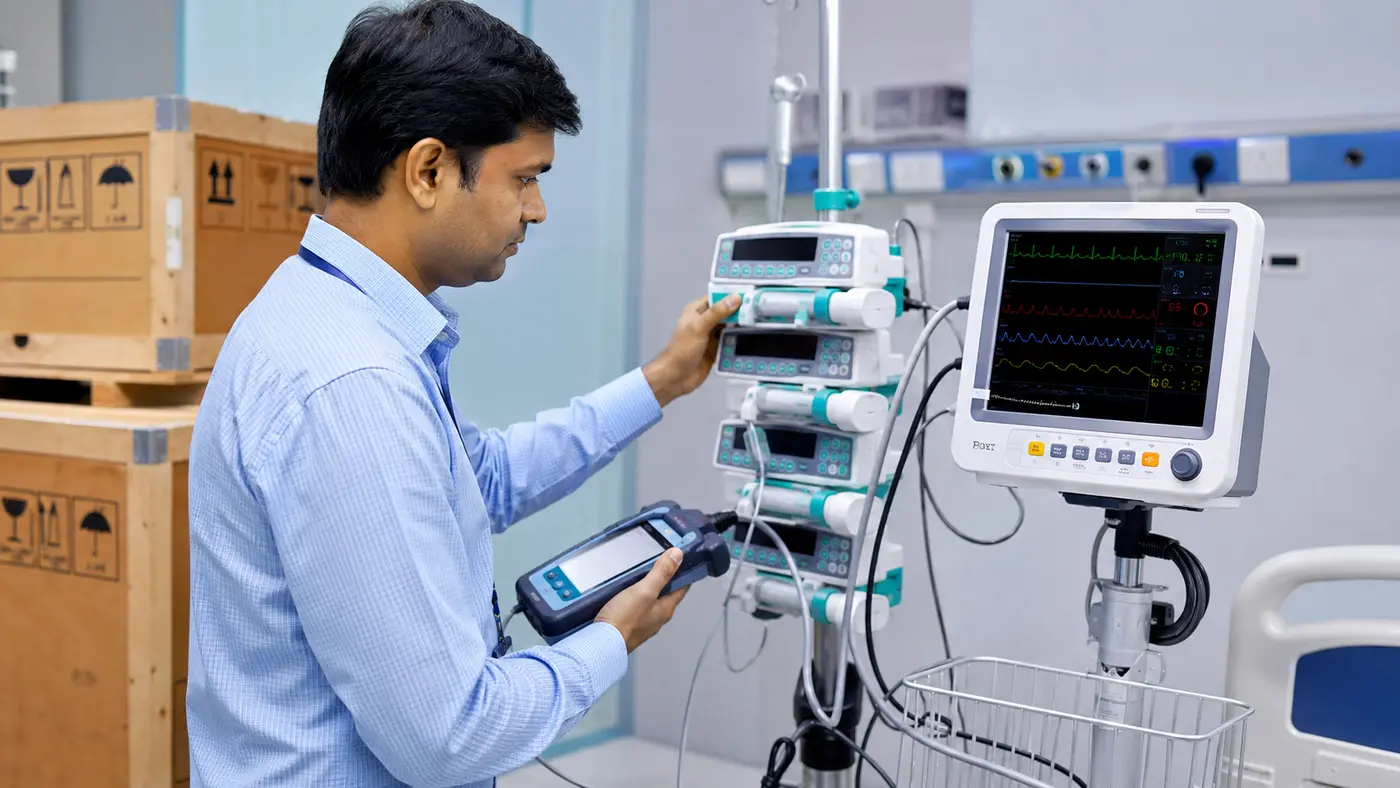
Use the intended clinical function to define the specification. State the equipment category, required parameters, patient profile, quantity, location, expected start date and duration. Include accessories, consumables, mounting, power and connectivity requirements. Brand-only requests can overlook the functions that users actually need.
If the rental will substitute for an existing asset, record compatibility requirements such as probes, circuits, connectors, disposables or data interfaces. Confirm which consumables are reusable, single-use or separately chargeable.
Inspect and accept the equipment at delivery
The receiving team should verify the model, serial number, accessories and physical condition against the delivery document. Biomedical engineering or an authorised technical person should complete the facility's acceptance checks before clinical deployment. Users should receive operating guidance whenever the model is unfamiliar.
- Match the delivered device with the approved specification.
- Record serial number and included accessories.
- Check cleanliness, condition, alarms, controls and battery.
- Review current service or calibration status where applicable.
- Document acceptance, location and responsible department.
Clarify service and replacement responsibilities
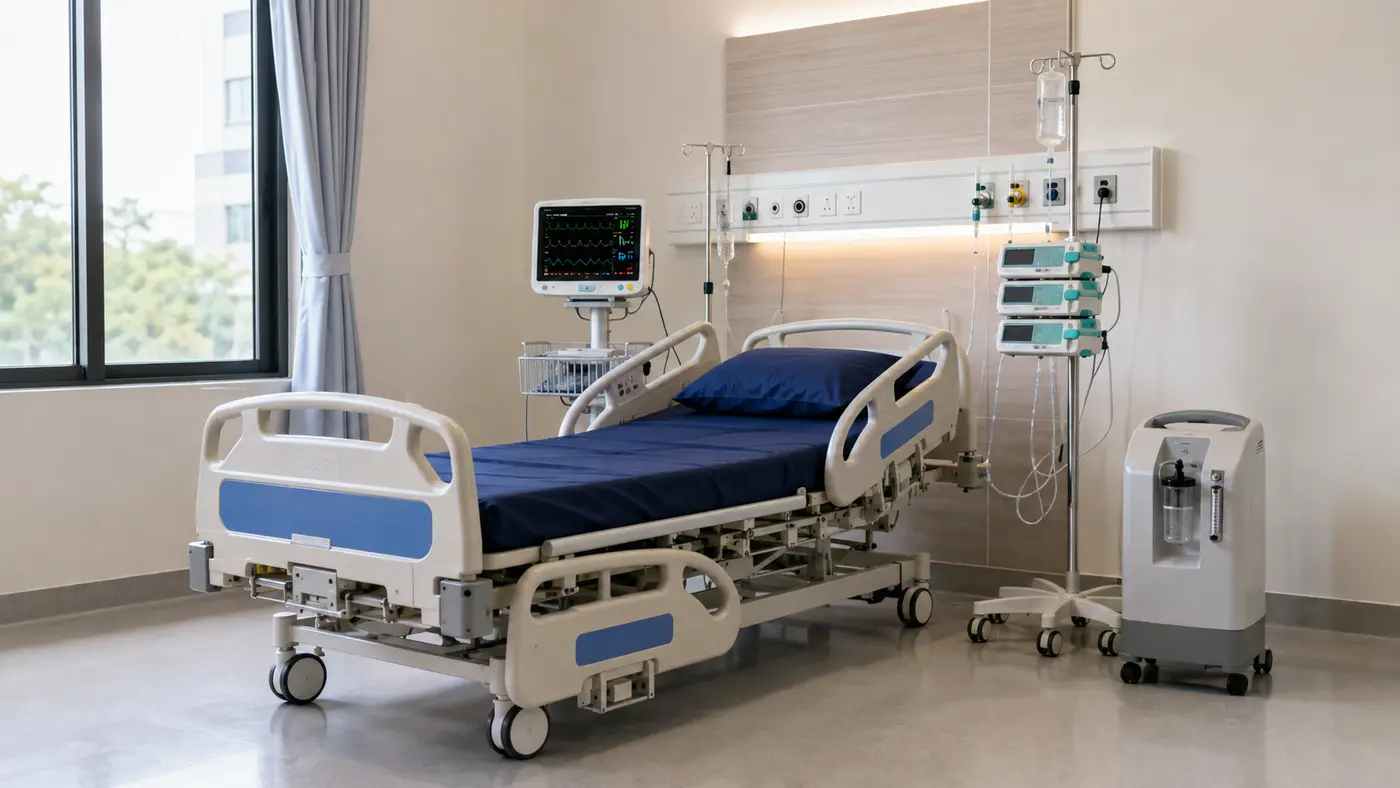
A rental agreement should explain preventive maintenance, breakdown reporting, response coordination and replacement arrangements. Ask what support is available outside normal hours, but do not assume every provider offers the same response time. Define who may repair the equipment and what happens if damage, misuse or consumable failure occurs.
The agreement should also identify rental start and end dates, deposit if any, transport, taxes, installation, minimum period, extension rates and return inspection. Avoid relying on verbal terms for clinically important equipment.
Documents hospitals should retain
- Approved requirement and supplier quotation
- Rental agreement and equipment list
- Delivery and installation record
- Acceptance check and calibration document where relevant
- User orientation or handover record
- Breakdown and service reports
- Return acknowledgement and final condition report
Good documentation supports internal control and makes it easier to trace which asset was used, where it was located and how technical issues were handled. The Government of India's biomedical equipment management technical manual illustrates the importance of equipment identity, location, functional status and maintenance records in structured hospital programmes.
Rental versus purchase
Compare total rental cost across the expected period with purchase, maintenance, residual value and availability. Purchase may be stronger for a stable long-term requirement. Rental may be stronger when duration is short or uncertain. The decision should consider clinical continuity and support, not only monthly cost.
BioMed provides short-term and long-term rental support for hospitals, clinics, emergency setups and temporary requirements. Review equipment rental support or use the contact page to share the equipment category, quantity, location and required dates.
Choose medical equipment rental in Hyderabad with control
Effective rental begins with a written specification and ends with a documented return. Between those points, technical acceptance, user orientation, service coordination and asset tracking protect clinical operations.
The right medical equipment rental in Hyderabad arrangement gives a healthcare facility usable equipment, clear responsibilities and predictable terms. Confirm every important detail before delivery so temporary capacity does not create a permanent operational problem.