
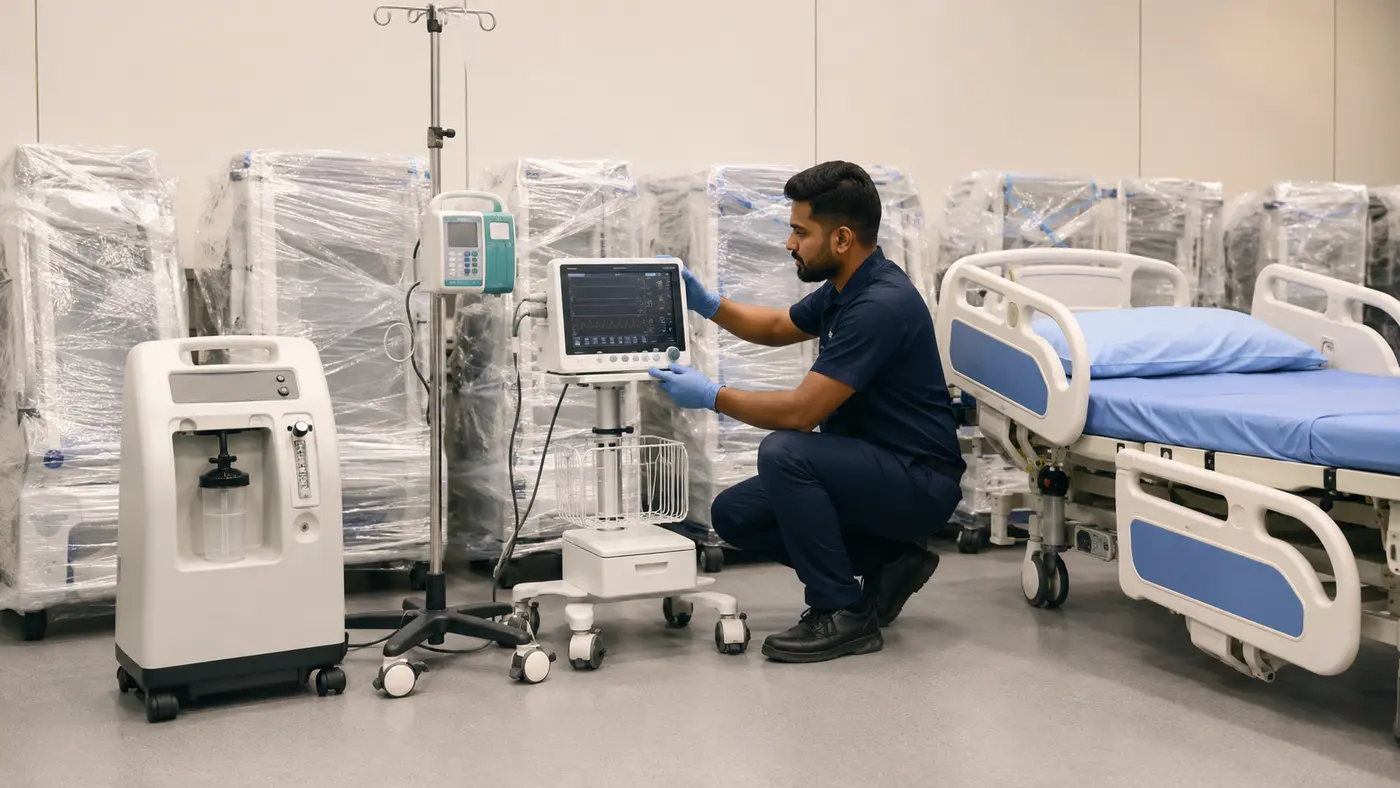
Medical equipment rental vs purchase is a decision hospitals should make using expected duration, utilization, urgency, maintenance responsibility, available capital and technology risk. Buying can provide long-term control and lower cost per use for consistently required equipment. Renting can be stronger when demand is temporary, uncertain or urgent.
The correct choice depends on the clinical requirement. A temporary ICU expansion, seasonal demand, replacement during a repair or short pilot project should not automatically be treated like a permanent capital requirement.
Medical equipment rental vs purchase: compare the real requirement first
Before calculating medical equipment rental vs purchase, define how long the equipment is needed and how intensively it will be used. A hospital that cannot estimate expected usage is likely to compare prices without understanding value.
- Expected duration of need
- Daily or monthly utilization
- Clinical criticality
- Availability of backup equipment
- Budget and cash-flow constraints
- Maintenance and calibration responsibility
- Technology obsolescence risk
- Space, storage and future redeployment
Use equipment utilization analysis where historical usage data exists. It can reveal whether an apparently permanent need is actually intermittent.
When rental may be the stronger choice
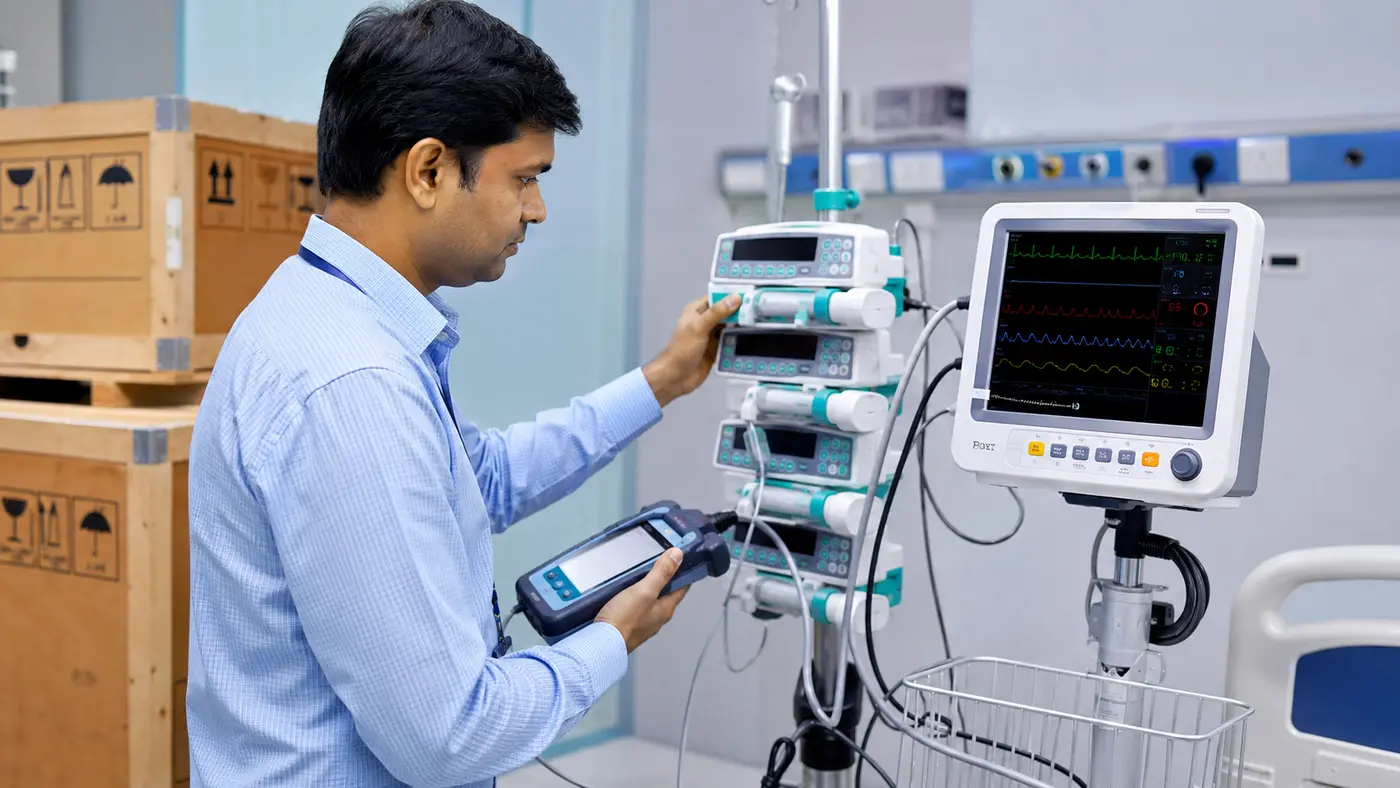
Rental is useful when the requirement is short term or the hospital wants operational flexibility. Examples include temporary critical-care capacity, bridging a long repair, clinical trials, events, new-service pilots or sudden patient-volume increases.
- Lower initial cash requirement
- Faster access for temporary needs
- Reduced risk of owning an underused asset
- Ability to change configuration when needs change
- Maintenance may be included depending on the agreement
Rental contracts must still define responsibility for damage, accessories, consumables, calibration, preventive maintenance, replacement during breakdown and delivery or collection charges.
When purchase may provide better value
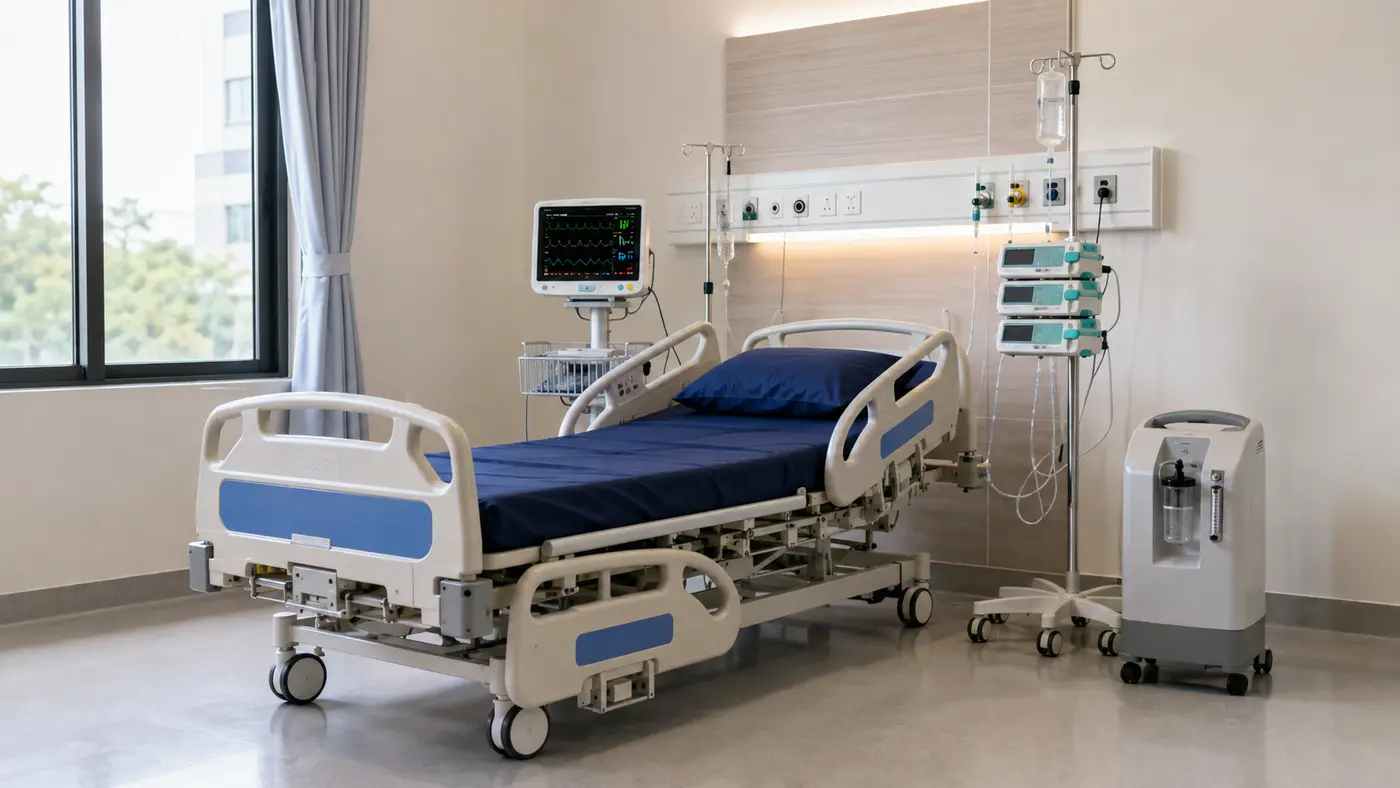
Purchase generally becomes stronger when the device is required continuously for many years, utilization is high and the hospital has confidence in its long-term clinical need. Ownership also gives greater control over configuration, availability and integration with internal asset systems.
However, purchase price alone is not total cost. Include installation, accessories, consumables, training, preventive maintenance, calibration, batteries, software, repairs and eventual replacement. Our procurement checklist covers these lifecycle questions in detail.
Medical equipment rental vs purchase should use total lifecycle cost
The strongest medical equipment rental vs purchase comparison calculates expected cost over the actual decision period. A six-month rental should be compared with the six-month cost and residual consequences of ownership, not with the purchase price alone.
For a multi-year requirement, compare total rental payments with purchase plus service, parts, depreciation considerations and residual value where relevant to the organization. Include downtime risk because a cheap ownership model can become expensive if the hospital has no realistic maintenance support.
Consider technology and obsolescence
Fast-changing technology can favour rental for selected applications, especially where software, connectivity or clinical requirements evolve quickly. Stable, high-use equipment may favour ownership. The decision should be device-specific rather than a hospital-wide rule.
How BioMed supports rental and purchase requirements
BioMed supports equipment supply and medical equipment rentals in Hyderabad for hospitals, clinics and diagnostic centres. Availability, configuration and rental terms depend on the equipment category and duration.
Hospitals can review indicative equipment ranges on the BioMed pricing page and contact BioMed for a quotation based on exact specifications and service requirements.
Medical equipment rental vs purchase is a utilization decision
Ultimately, medical equipment rental vs purchase should answer one question: which option delivers the required clinical availability at the most sensible lifecycle cost and risk? Hospitals that measure duration, utilization and support requirements before committing are far less likely to end up with idle assets or avoidable rental expense.