
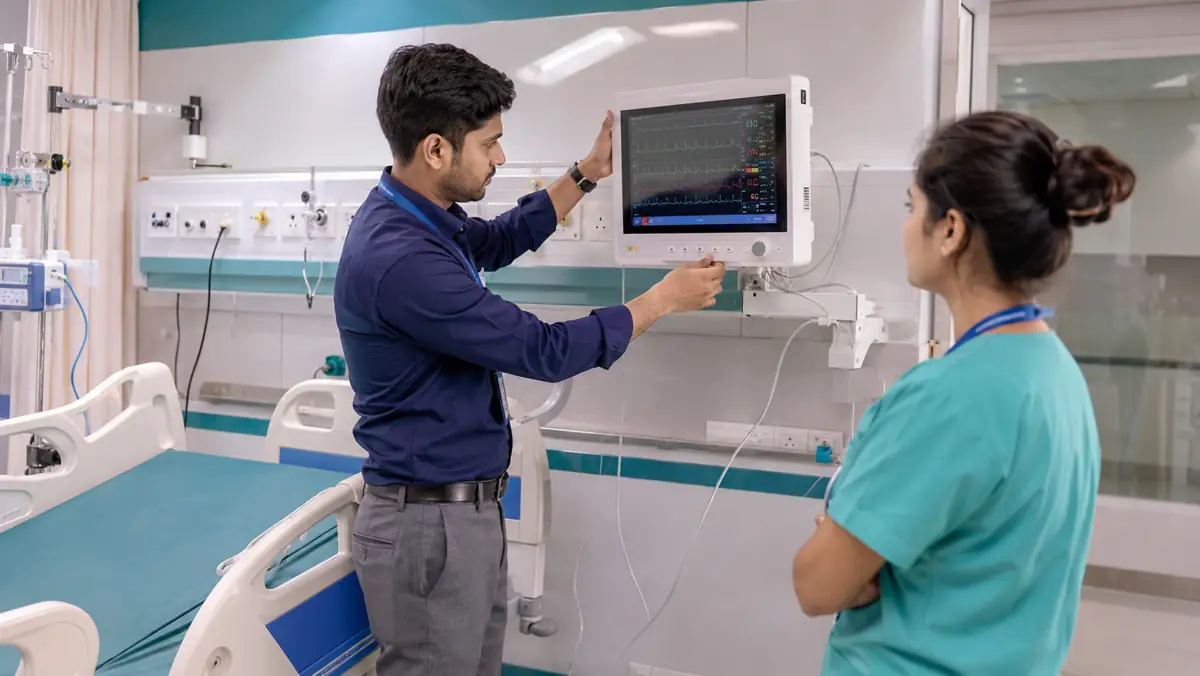
Medical equipment installation and commissioning converts a delivered device into an identified, tested and authorised clinical asset. Installation covers physical placement, assembly, connections and configuration. Commissioning verifies that the equipment, accessories, environment and records are ready for the intended use.
A device should not enter routine service directly from its shipping carton. Hospitals need coordinated checks involving procurement, biomedical engineering, facilities, information technology and the user department, depending on the equipment category.
Plan medical equipment installation and commissioning early
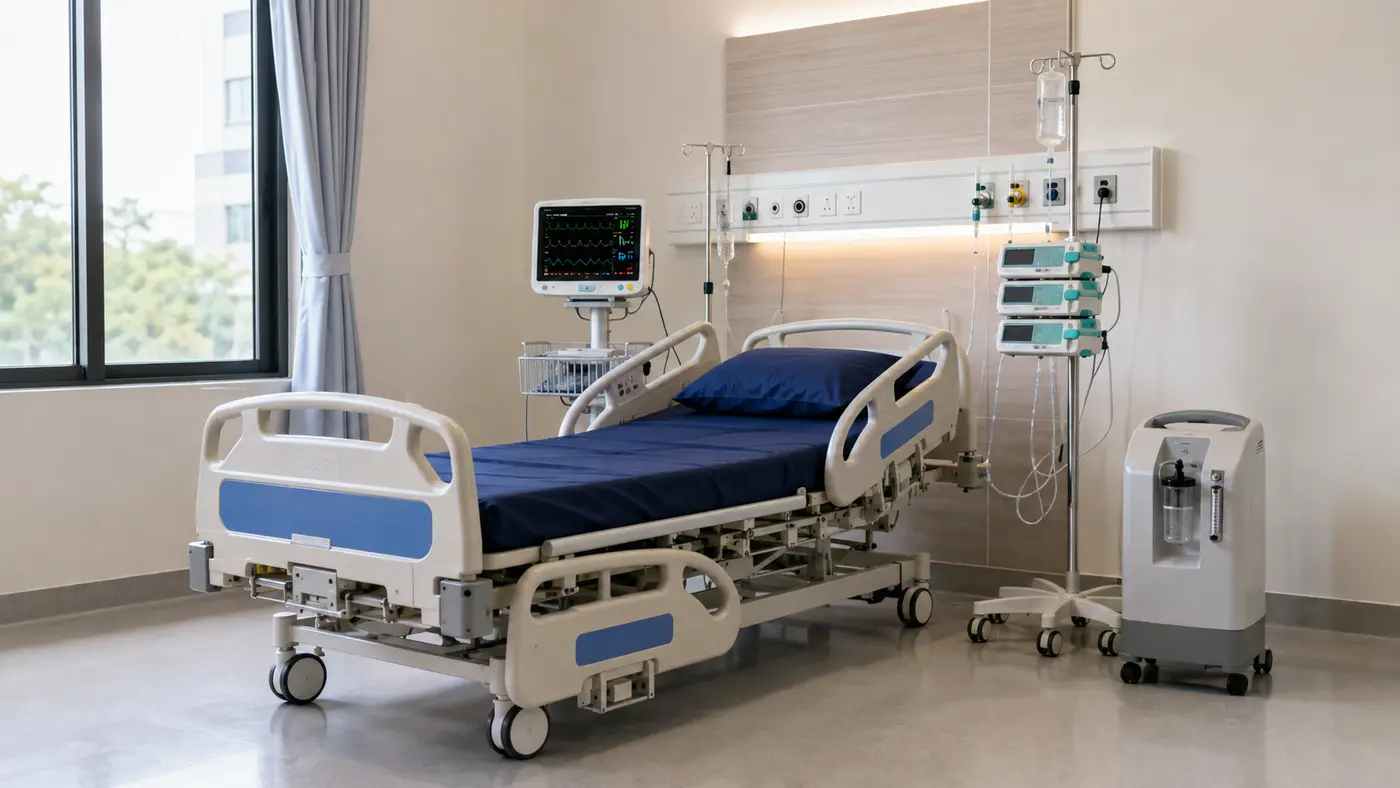
Site readiness should be confirmed before dispatch. Review space, access route, floor loading, electrical supply, earthing, ventilation, medical gases, water, drainage, network connectivity and environmental conditions against manufacturer requirements. Large equipment may need doorway, lift and rigging plans.
- Approved room layout and clear delivery route
- Power outlets, voltage, backup supply and earthing
- Medical gas, water, drainage or exhaust where required
- Network, data-security and system-integration approvals
- Space for service access, accessories and safe operation
Inspect equipment at delivery
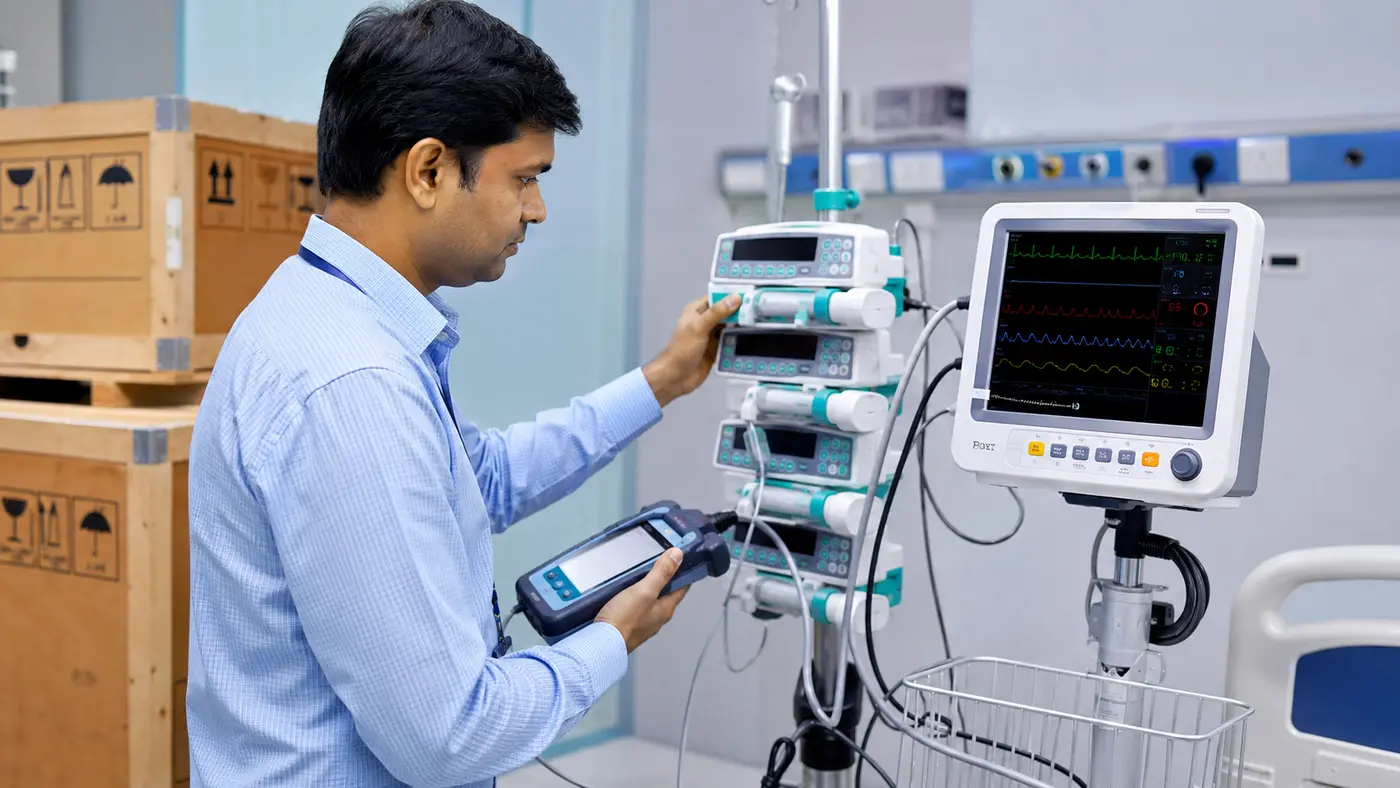
Match the shipment with the purchase order, packing list and approved specification. Record manufacturer, model, serial number, software version where applicable, accessories and visible condition. Note missing, damaged or substituted items before accepting the delivery without qualification.
Keep packaging when the contract or acceptance period requires it. High-value accessories, probes, batteries, manuals, licences and test fixtures should be counted individually.
Installation by authorised personnel
Follow manufacturer instructions for assembly, placement, connections and initial configuration. Do not alter electrical plugs, safety features, software or accessories merely to make the device fit an unprepared site. Installation work must stay within the technician's training and authorisation.
Assign the hospital asset ID and department before commissioning. This ensures that every test report, warranty document and training record refers to the same device.
Acceptance and functional verification
Commissioning should demonstrate the functions required by the approved specification. Check self-tests, controls, displays, alarms, battery, accessories and relevant outputs. Use suitable analysers or reference equipment when performance verification is required. Calibration and electrical safety testing should be completed where applicable to the device and hospital policy.
- Verify identity and configuration.
- Confirm environmental and utility connections.
- Complete functional and safety checks.
- Record results, test equipment and acceptance criteria.
- Resolve deviations before clinical release.
User orientation and handover
Training should cover intended use, basic controls, alarms, accessories, cleaning, pre-use checks, shutdown, charging, fault reporting and situations requiring removal from service. Training does not replace the manufacturer's instructions or formal clinical competency requirements.
Retain the purchase order, delivery record, installation report, acceptance results, calibration or safety documents, warranty, manuals, licences, training attendance and escalation contacts. The Central Drugs Standard Control Organisation provides India's regulatory information for medical devices; facilities should also follow applicable device requirements and internal governance procedures.
BioMed supports equipment supply, site coordination, installation, initial checks and technical handover. Explore equipment supply and installation support or discuss a planned hospital setup through the contact page.
Start maintenance control from day one
Enter warranty dates, preventive-maintenance needs, calibration requirements, approved accessories and responsible department into the asset register immediately. Delaying this work until the first breakdown creates missing history and weak contract control.
Hospitals should record deviations found during acceptance, the person responsible for correction and the final closure date. Equipment with unresolved deviations should remain clearly controlled until the authorised team confirms that the approved specification has been met.
Well-managed medical equipment installation and commissioning confirms that the site, device, accessories, users and records are aligned before clinical use. It protects the investment and provides a reliable baseline for future maintenance and performance review.