
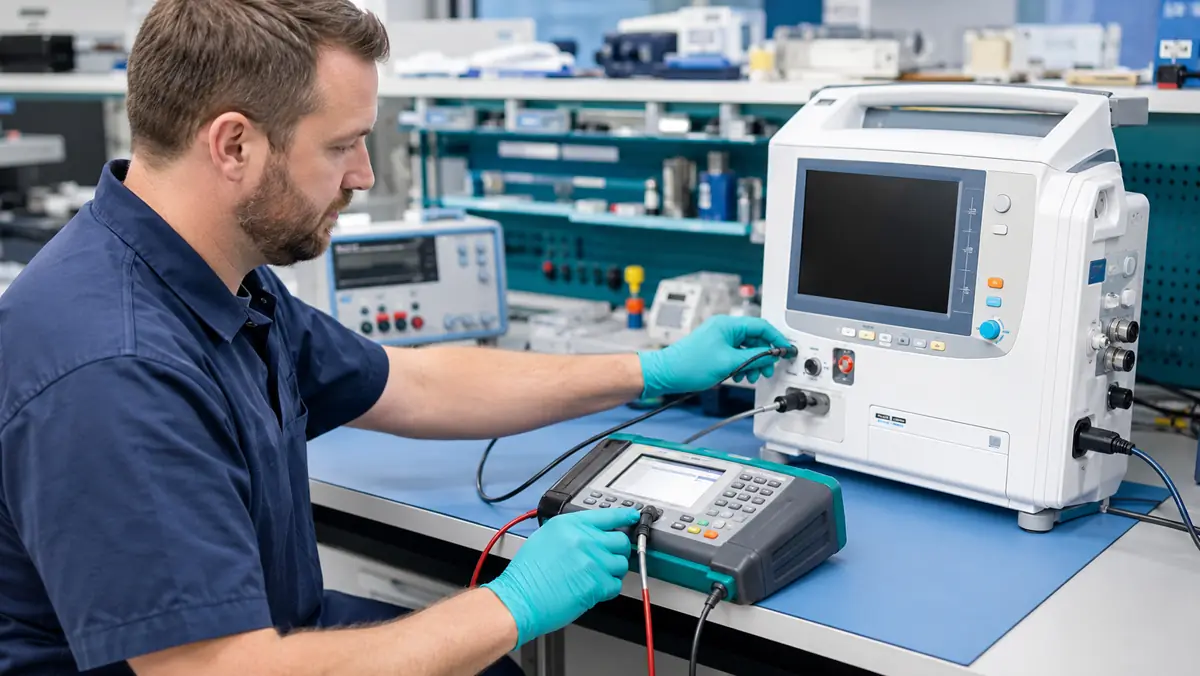
Medical equipment electrical safety testing is a controlled technical process used to assess relevant electrical safety characteristics of powered and patient-connected devices. It should be performed by competent personnel using suitable test equipment, the correct device classification and approved procedures.
Electrical testing is not a substitute for visual inspection, functional verification or calibration. Each activity answers a different question, and the required combination depends on the equipment, manufacturer guidance and hospital policy.
When medical equipment electrical safety testing may be required
Hospitals commonly consider testing during acceptance, after repairs that could affect electrical protection, following damage or liquid entry, after certain modifications, and at risk-based intervals. The exact trigger and method should be defined by the facility's engineering programme and applicable manufacturer instructions.
- New equipment acceptance before clinical release
- Repair involving power supply, mains components or enclosure
- Damaged cable, plug, connector or evidence of liquid entry
- Equipment transferred from an uncontrolled environment
- Scheduled inspection based on risk and service history
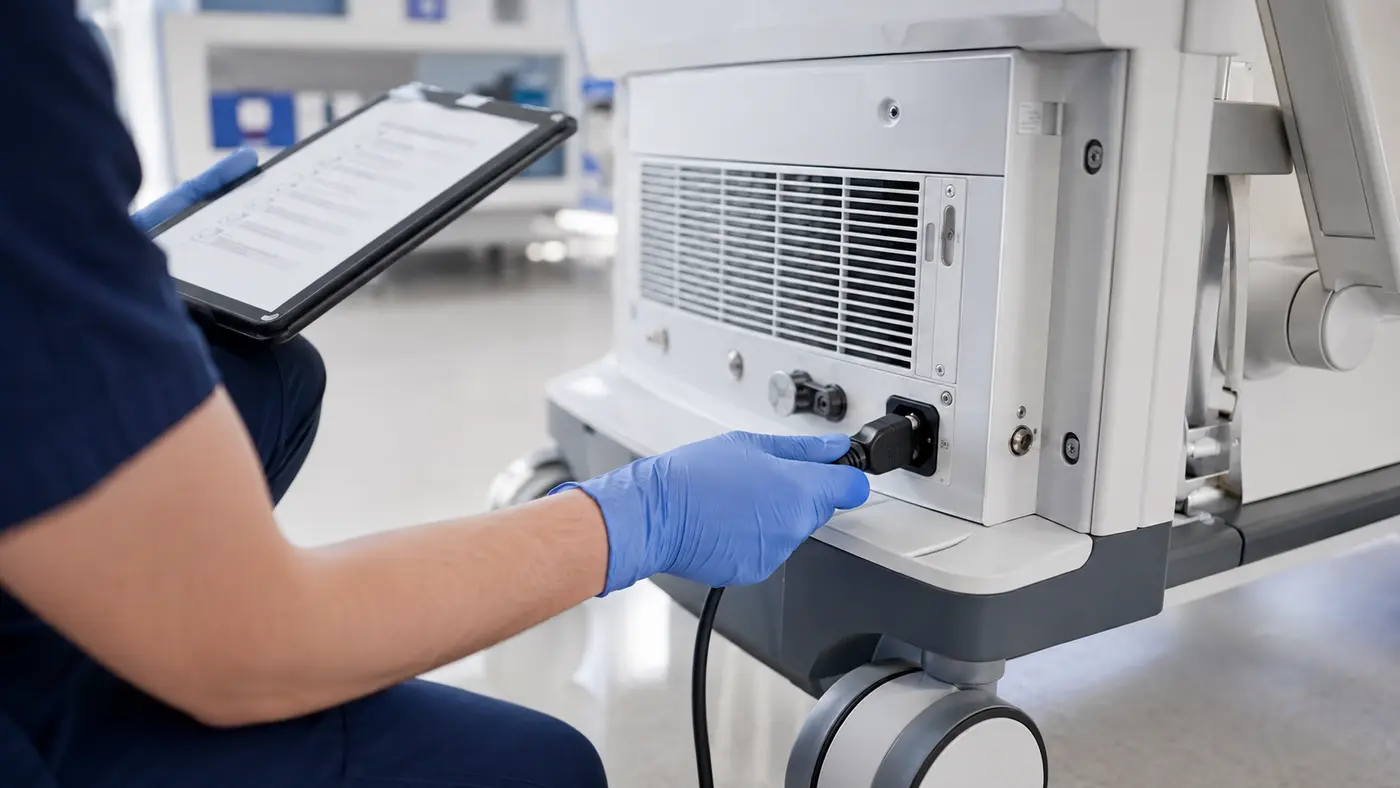
Visual checks before connecting an analyser
Confirm manufacturer, model, serial number, asset ID, power rating and equipment class. Inspect plug, cable, strain relief, enclosure, fuses, connectors and accessible protective-earth points. Look for unauthorised adapters, repairs, corrosion, contamination or missing covers.
If the device is visibly unsafe, isolate it and address the defect before proceeding. A numerical test result should never override a serious physical finding.
Use the correct test method
Test configuration varies between equipment classes and applied-part types. The technician must select the correct sequence, limits and connection method for the device. Inappropriate settings can produce misleading results or damage sensitive equipment.
Depending on the equipment and procedure, records may include protective-earth continuity, insulation-related checks and leakage-current measurements. These terms should not be reduced to a generic pass button. The result must be interpreted against the correct criteria.
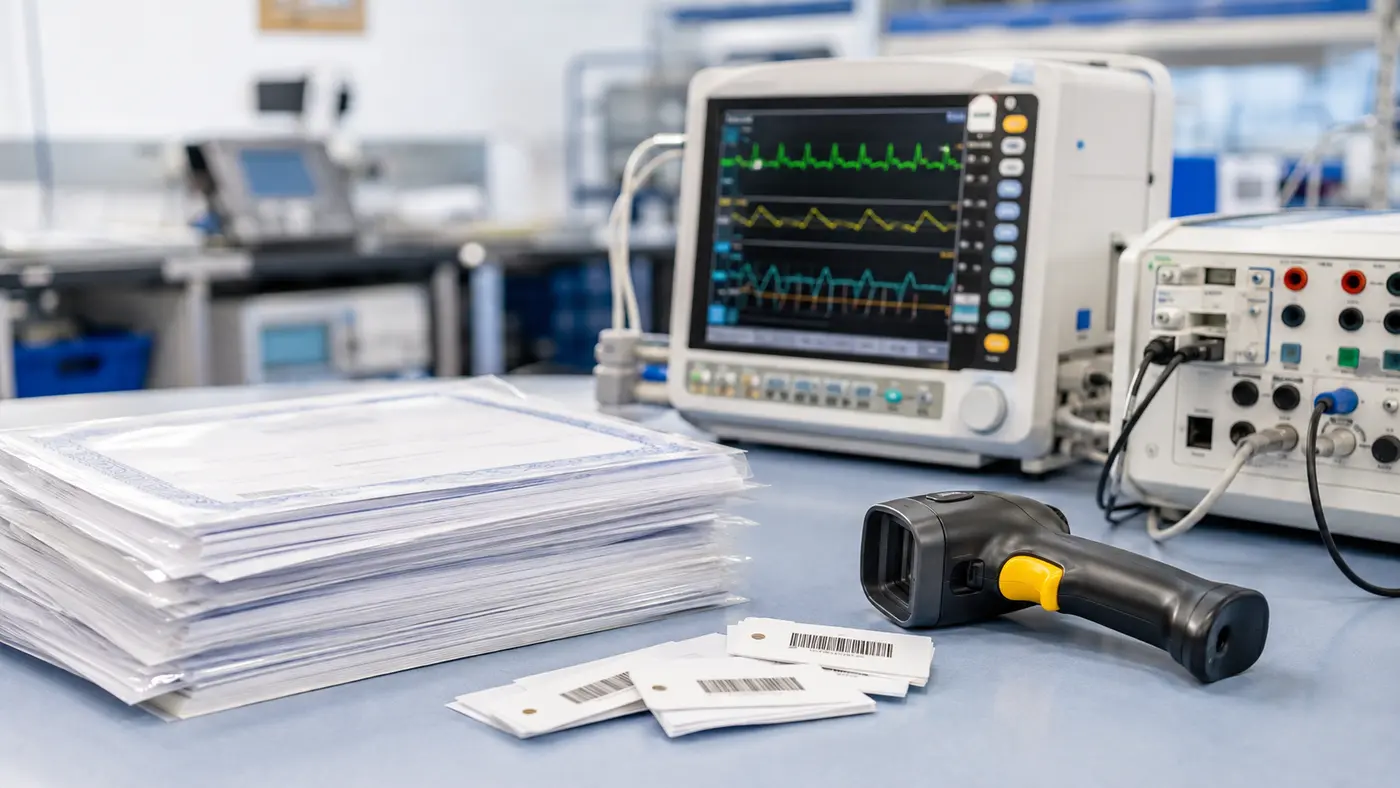
What the test record should contain
- Hospital, department, asset ID and equipment identity
- Device class, applied-part classification and test configuration
- Analyser identity and current calibration status
- Measured values, limits and pass or fail outcome
- Visual findings, repairs, restrictions and next action
- Technician, date and authorised sign-off
The Government of India's STQC medical-equipment calibration information demonstrates the role of specialised test facilities and appropriate reference equipment for clinical devices. Hospitals should ensure that safety and performance checks are performed within a documented quality system.
Responding to a failed result
Remove the asset from service according to hospital policy, label its status and record the failure. Diagnose the cause before repair. After corrective work, repeat the required inspection and tests, then complete functional verification before authorised return to use.
Do not repeatedly test a failing device without investigating the cause. The issue may involve the mains cable, internal power supply, moisture, contamination, insulation, earthing or an earlier unauthorised repair.
BioMed supports hospital engineering teams with inspection, maintenance, repair coordination and documented verification. Review preventive maintenance support or share an equipment list through the BioMed contact page.
Integrate results with maintenance history
Link every record to the asset register and related repair order. Trend repeated failures by model, location and cause. This can reveal damaged outlets, poor cable handling, environmental exposure or ageing equipment requiring replacement review.
Testing frequency should be risk based. A single fixed interval for every powered device may waste effort on low-risk assets while missing equipment that needs closer control because of use, environment, age or repair history.
Effective medical equipment electrical safety testing depends on competent staff, correct classification, suitable analysers and disciplined follow-up. Hospitals gain the most value when results become part of the complete equipment history rather than an isolated certificate.