
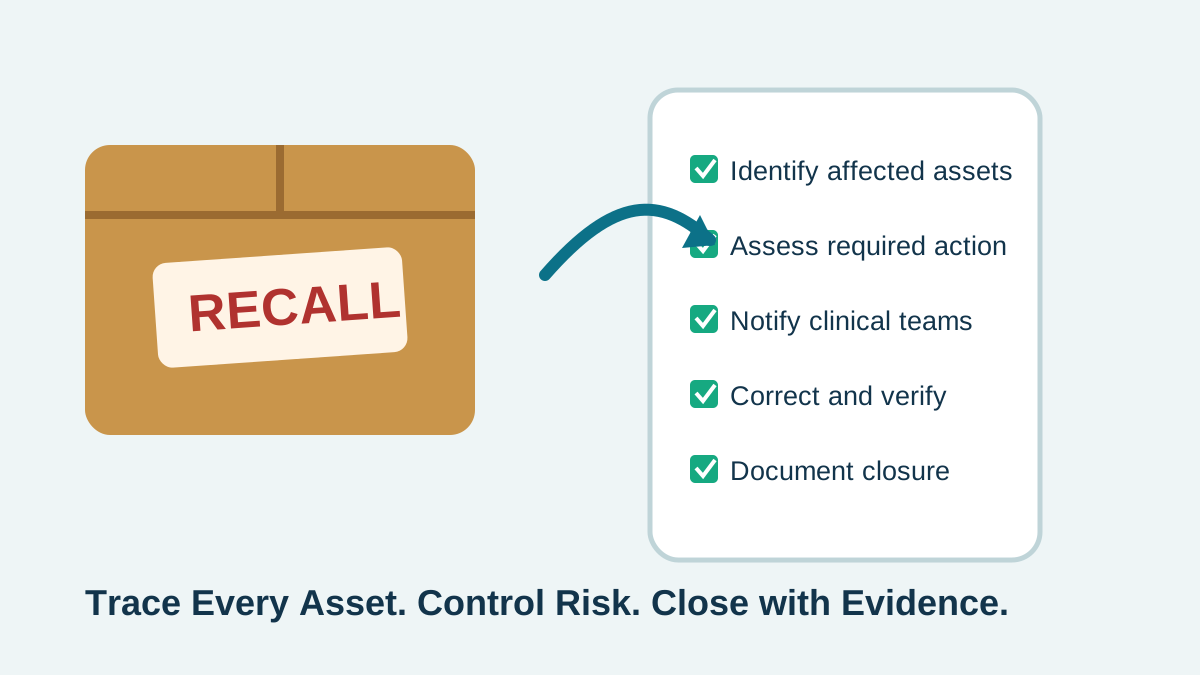
Medical device recall management in hospitals is fundamentally a traceability problem. A safety alert is useful only if the hospital can determine quickly whether the affected manufacturer, model, serial number, software version, accessory or lot is present and where it is being used. The quality of the asset register therefore directly affects the speed of recall response.
Not every safety communication requires equipment to be permanently removed. Actions can include inspection, software update, part replacement, revised instructions, configuration change, increased monitoring or return of the device. Hospitals should follow the specific official or manufacturer communication rather than applying a generic response to every alert.
Medical device recall management in hospitals begins by validating the alert
Confirm the source, affected product identifiers, reason for action, urgency, required response and contact details. Avoid acting on forwarded messages without checking the original communication. The hospital device recall process should record when the alert was received and who accepted responsibility for coordinating it.
- Manufacturer and product name
- Model or catalogue number
- Serial, batch or lot range
- Software or firmware version where relevant
- Description of the safety issue
- Required hospital action
- Response deadline
- Manufacturer or authorised contact
The World Health Organization's medical equipment inventory guidance explains that inventory records support tracking of alerts and recalls as part of effective equipment management. Accurate identification is therefore not administrative housekeeping; it is a safety control.
Medical device recall management in hospitals depends on serial-level traceability
A medical equipment field safety action may affect only specific serial numbers or versions. Searching by equipment name alone can produce false positives and missed assets. Compare the notice with manufacturer, model, serial number, software version and accessory details in the live inventory, then physically verify affected devices when required.
Include equipment temporarily moved to another department, loaned units, backup devices, workshop equipment and assets awaiting installation. A device not in its usual room can still be affected.
Control affected equipment according to the stated action
If the notice requires use to stop, quarantine affected equipment clearly and arrange clinical alternatives. If continued use is permitted under specified conditions, communicate those conditions to users and document them. Do not independently modify equipment unless the action is authorised and technically supported.
This device safety alert management stage should involve clinical leadership when removing equipment could affect service capacity. Biomedical engineering can identify affected assets, but departments need to understand what the restriction means for patient care.
Coordinate corrective action with the manufacturer or service provider
Corrective work may include inspection, software installation, component replacement, relabelling or return. Schedule the work, record who performed it and retain service evidence. If multiple devices are affected, use a tracker showing asset number, location, action status and completion date.
- Affected and not yet controlled
- Quarantined or restricted
- Awaiting manufacturer action
- Corrective action completed
- Function verified
- Returned to authorised use
A disciplined clinical equipment recall workflow prevents a partially completed campaign from being mistaken for closure.
Verify the device before return to service
After corrective action, confirm that the required manufacturer instruction has been completed and that any necessary functional or safety checks are satisfactory. Update software-version or part information in the asset record where relevant. Remove quarantine labels only through an authorised process.
For connected devices, recall action may overlap with cybersecurity remediation. The FDA's medical device cybersecurity information illustrates why software vulnerabilities and lifecycle support can require coordinated manufacturer and healthcare-facility action.
Close the recall with evidence, not an email
Hospital recall traceability should allow an auditor or safety team to see the original notice, affected asset list, risk-control action, manufacturer intervention, verification and final closure. Record unaffected devices checked during the search when that information is useful to demonstrate complete scope review.
After closure, examine whether the recall exposed weaknesses in inventory data. Missing serial numbers, outdated locations or inconsistent model names should trigger corrective cleanup because the same gaps will slow the next safety action.
BioMed provides medical equipment maintenance and asset-oriented technical support for healthcare facilities. Hospitals needing assistance with equipment identification, service coordination or post-action technical checks can use the BioMed contact page.
Reliable medical device recall management in hospitals connects safety communications with accurate asset data and controlled technical action. When hospitals can identify affected equipment quickly, communicate restrictions clearly, document corrective work and verify closure asset by asset, a recall becomes a manageable process rather than a disruptive search exercise.