
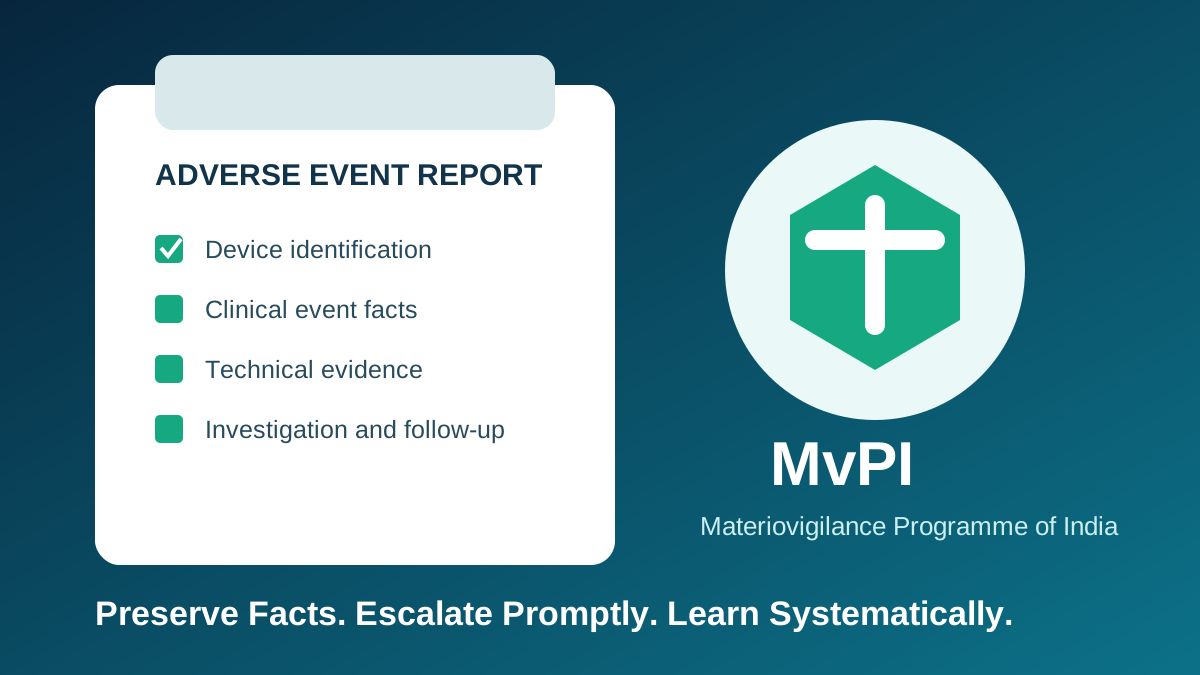
Medical device adverse event reporting in India is an important part of learning from device-related safety concerns. When a medical device is suspected of contributing to an injury, malfunction or other adverse outcome, the hospital's first responsibilities are clinical care and immediate risk control. The next responsibility is to preserve enough reliable information for technical investigation and appropriate reporting.
Biomedical engineering has a valuable role because the team can identify the exact device, preserve service history, secure accessories and help distinguish a suspected equipment problem from issues involving use, environment, consumables or infrastructure. That technical work should support, not replace, the hospital's clinical and patient-safety processes.
Medical device adverse event reporting in India and the role of MvPI
India's Materiovigilance Programme of India, commonly called MvPI, was established to monitor medical-device-associated adverse events and support safer use of medical devices. The Indian Pharmacopoeia Commission functions as the National Coordination Centre. Its MvPI programme information describes systematic collection and analysis of medical-device adverse-event data as a core objective.
A medical device incident reporting culture is stronger when staff are encouraged to report concerns promptly without waiting for absolute proof that the device caused the event. Causality can be assessed through investigation; missing evidence is much harder to reconstruct later.
Medical device adverse event reporting in India starts with preserving facts
For MvPI hospital reporting, record what is known at the time and clearly separate facts from assumptions. Identify the patient event according to hospital policy, the device, accessories, consumables, settings, alarms and sequence of events. Do not alter settings or erase logs unnecessarily before technical review when the device can be safely secured.
- Manufacturer, model, serial number and asset number
- Department, date and time of event
- Device settings and displayed alarms where available
- Accessories, disposables and connected equipment involved
- Observed malfunction or unexpected behaviour
- Immediate clinical and technical actions
- Recent maintenance, repair or calibration history
- Photographs or logs where permitted by hospital policy
Quarantine the device when continued use is uncertain
If the device may be unsafe or evidence needs to be preserved, remove it from routine use according to hospital procedure and label it clearly. Keep relevant accessories and disposables with the device when they may be part of the investigation. Avoid sending equipment for routine repair before the incident team has decided what evidence must be retained.
This device safety event documentation step is particularly important for intermittent faults. A technician who receives only the main unit without the cable, sensor, consumable or power adapter used during the event may be unable to reproduce the condition.
Coordinate clinical, biomedical and administrative investigation
A device event should not be investigated from a purely technical perspective. Clinical workflow, patient condition, user interaction, consumables, power supply, network status and environmental factors may all matter. Biomedical engineering should document technical findings without making unsupported conclusions about clinical causation.
The IPC's updated MvPI standard operating procedures include processes for collection and recording of medical-device adverse-event information. Hospitals participating in the programme should follow the current official reporting pathway and their own governance requirements.
Use reporting to improve the equipment-management system
A materiovigilance reporting process should create learning beyond the individual case. Review whether similar devices are in use, whether a manufacturer advisory exists, whether preventive action is needed and whether staff require communication or training. Link the incident reference to the asset record without placing confidential clinical information into general maintenance notes.
- Check for similar complaints involving the same model.
- Review recent service and configuration changes.
- Escalate manufacturer or supplier communication appropriately.
- Document corrective and preventive actions.
- Verify equipment before authorised return to service.
Build a hospital medical device vigilance culture
Hospital medical device vigilance works best when clinical users know whom to contact and biomedical teams know how to preserve technical evidence. Include device-event escalation in orientation and periodically review the process with quality, nursing, clinical engineering and patient-safety teams.
BioMed supports hospitals through medical equipment maintenance and technical documentation services. For equipment-specific service assessment following a reported malfunction, healthcare facilities can use the BioMed contact page. Formal adverse-event reporting should follow the hospital's governance and the current official MvPI process.
Responsible medical device adverse event reporting in India depends on prompt escalation, factual documentation, preservation of evidence and coordinated investigation. When hospitals treat device events as opportunities for structured learning rather than isolated repair calls, materiovigilance becomes part of everyday patient-safety practice.