
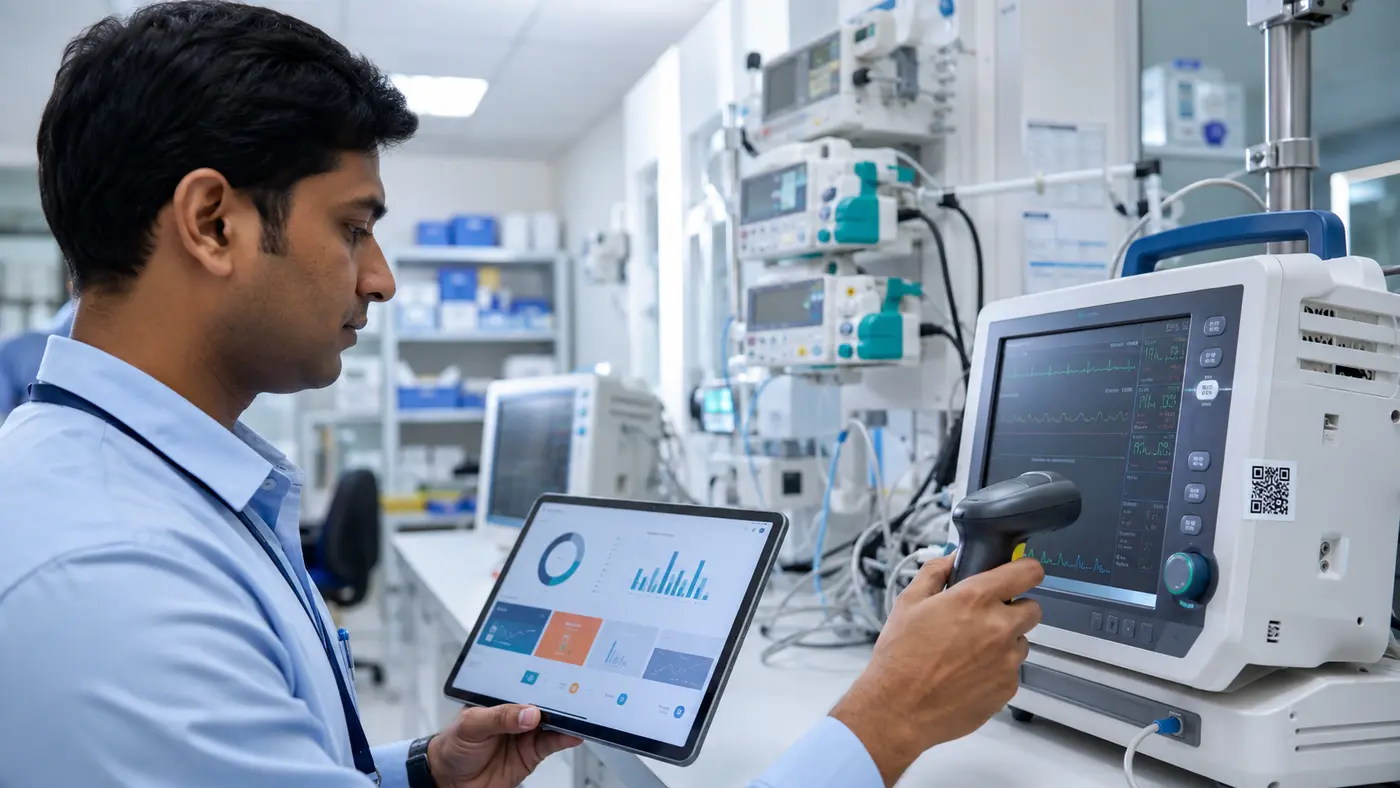
Medical equipment decommissioning and disposal should be treated as a controlled stage of the equipment lifecycle, not as the simple removal of an unwanted machine from a department. A device leaving clinical service may contain patient data, batteries, electronic components, hazardous materials, reusable accessories or hospital identification. It may also remain listed as active in maintenance and calibration schedules unless records are formally closed.
A clear decommissioning process protects the hospital from accidental reuse, incomplete records and inappropriate disposal. The exact route depends on the equipment type, ownership, condition, applicable law, hospital policy and contractual obligations.
Medical equipment decommissioning and disposal starts with technical assessment
Before condemning an asset, document why continued service is no longer appropriate. Reasons may include irreparable failure, repeated breakdowns, unavailable parts, manufacturer obsolescence, excessive repair cost, physical deterioration, changed clinical requirements or replacement by a newer system.
- Confirm asset number, manufacturer, model and serial number.
- Review age, condition and recent service history.
- Record the fault or reason for retirement.
- Check whether parts, manufacturer support or competent repair remain available.
- Estimate repair cost where repair is technically reasonable.
- Confirm ownership, lease, rental or finance restrictions.
The assessment should distinguish between equipment that is unsafe or beyond economic repair and equipment that is merely surplus to one department. A usable surplus device may have an approved redeployment route if it meets the receiving department's requirements and passes the necessary technical checks.
Use an authorised condemnation decision
The biomedical engineer should provide technical evidence, but disposal approval should follow the hospital's governance and financial authority structure. Depending on the organisation, the decision may involve the user department, biomedical engineering, administration, finance, stores and a condemnation committee.
Record the approval date, reason, asset value information where required and authorised disposal route. Equipment awaiting disposal should be clearly identified and physically controlled so that it cannot return to clinical use by mistake.
Protect patient and hospital data
Modern medical devices can store patient identifiers, images, test results, network settings, user accounts and service information. Removing a device from a ward does not remove that data. Before sale, return, recycling or transfer, follow the manufacturer's supported process and the hospital's information-security policy for data removal.
Involve information technology or the designated data-security team when a device contains internal storage, removable media or network configuration. Keep evidence of the approved sanitisation or destruction process where required.
Decontaminate and make the equipment safe to handle
Equipment leaving a clinical area should undergo appropriate cleaning or decontamination according to infection-control policy and manufacturer instructions. Identify batteries, pressurised components, chemicals, lamps or other items requiring special handling. Do not dismantle equipment casually when hazardous energy or materials may be present.
Accessories should be assessed separately. Some may be reusable with compatible equipment, while damaged or single-use items require their own disposal route.
Close the asset record and associated schedules
Once retirement is approved, update the equipment register. Close open preventive-maintenance tasks, calibration schedules, AMC or CMC coverage and outstanding service calls as appropriate. Record the final disposition so an auditor can understand what happened to the asset.
- Date removed from clinical service
- Condemnation or retirement approval reference
- Final condition and reason
- Data-sanitisation status where applicable
- Decontamination status
- Disposal, return, transfer or recycling route
- Authorising personnel and supporting documents
Choose the disposal route responsibly
Electronic medical equipment should not automatically enter general waste. Follow applicable environmental and waste-management requirements and use authorised channels appropriate to the asset and materials involved. Where equipment is returned to a supplier, recycler or other organisation, retain handover documentation.
BioMed supports hospitals across the equipment lifecycle through medical equipment technical services and documentation-oriented maintenance processes. Facilities can discuss equipment condition and serviceability through the BioMed contact page before making a repair-versus-retire decision.
Well-governed medical equipment decommissioning and disposal closes the lifecycle properly. Technical assessment, authorised approval, data protection, decontamination, safe handling and accurate records ensure that retired equipment does not create a new operational or compliance problem after it leaves clinical service.